Bulgur vs Couscous: Grain, Texture, and Cooking
Bulgur is wheat that has been cooked, dried and broken into pieces. Traditional couscous consists of small granules made from semolina. They can fill similar roles on a plate but are not the same ingredient.
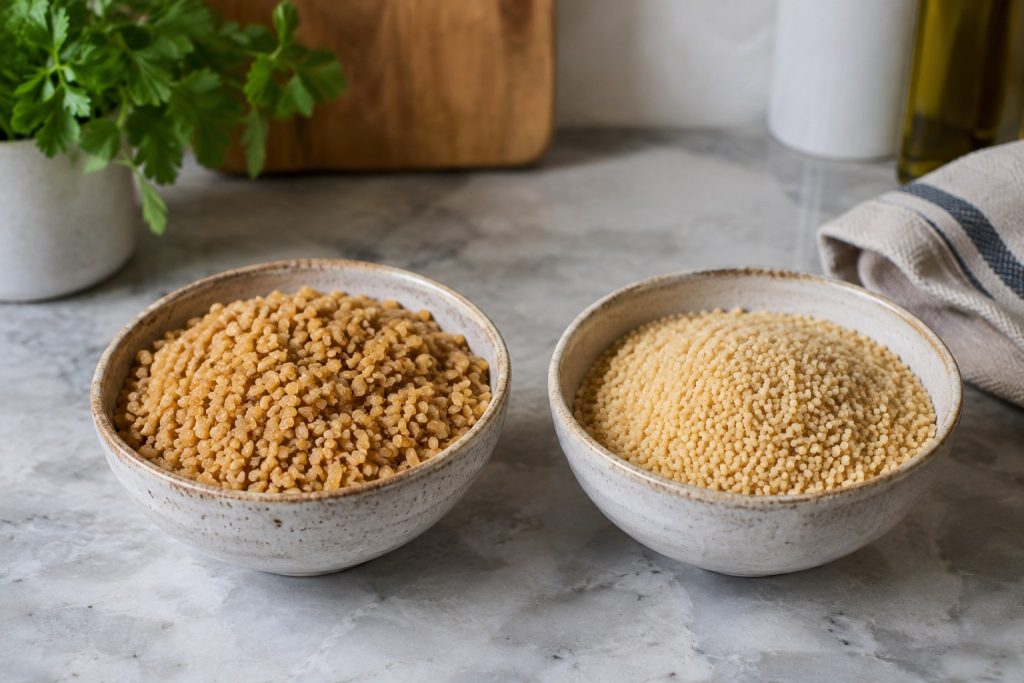
Check the grain and ingredient list
Bulgur is a whole-grain wheat product. Standard semolina couscous is usually refined, although whole-wheat versions exist. Both ordinary wheat products contain gluten. A different name or smaller grain does not make either suitable for a gluten-free diet.
Match texture to the dish
Bulgur has an irregular, grainy bite and works in salads and pilafs. Small couscous granules give a finer texture and can accompany vegetables or stew. Larger pearl couscous is another format; do not assume it cooks like the small instant kind.
Follow the package method
Fine and coarse bulgur can need different soaking or cooking methods. Many small couscous products hydrate quickly, while other types require simmering. Use the liquid amount and time on your package rather than swapping the ingredients into a recipe unchanged.
Compare like-for-like portions
Compare labels on the same basis: dry with dry, or prepared with prepared. Absorbed water changes the weight without adding the nutrients in another dry serving. Consider fiber, the portion you will eat and additions such as oil or sauce rather than declaring one product universally better.
Sources
Whole Grains Council; Bob’s Red Mill.
Related reading
Couscous vs. Quinoa: Ingredients, Cooking, and Portions
Whole Grains vs. Refined Grains: Read Past the Package Color
Related reading
Pearl Barley vs Hulled Barley: What Changes?
Related reading
Pearl Couscous vs Small Couscous: Check the Cooking Method
Related reading
Bulgur vs Raw Cracked Wheat: Check What Has Already Been Cooked
About this article: an introductory editorial draft. Not yet independently reviewed by a fitness professional.