Bottled vs Fresh Lemon Juice: Cooking Is Not Canning
For an everyday dressing or finished dish, fresh and bottled lemon juice can be practical flavor choices. For home canning, they are not automatically interchangeable. Use the exact acid ingredient and quantity required by a research-tested recipe.
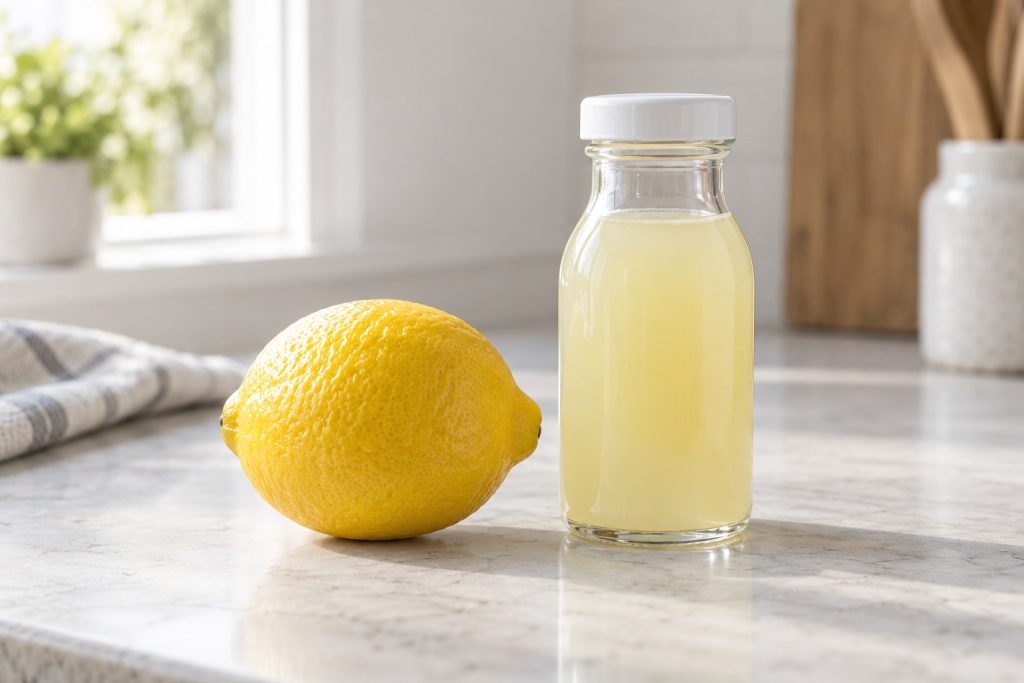
Read the bottle carefully
The National Center for Home Food Preservation distinguishes bottled juice from concentrate from juice labeled not from concentrate. Its canning guidance calls for the former because of its standardized acidity. Simply being sold in a bottle is not enough.
Do not judge preservation by taste
Fresh lemon juice varies in acidity, and a sour taste is not a substitute for a validated process. The center advises against substituting fresh juice or juice not from concentrate when a canning recipe requires standardized bottled juice. Follow the complete tested recipe.
Keep everyday cooking separate
For a meal you are preparing to eat, compare flavor, ingredients and convenience. Check whether the product is lemon juice or a sweetened lemon drink. If a recipe specifies zest as well as juice, a bottle of juice does not supply the peel’s texture and aroma.
Store the chosen product correctly
Follow the bottle’s after-opening instructions and use clean utensils when handling fruit or juice. This comparison does not supply a canning method or storage schedule. For preservation, use the linked authoritative instructions rather than improvising ingredient swaps.
Sources
National Center for Home Food Preservation; National Center for Home Food Preservation.
Related reading
Jam vs Jelly: What Is Different in the Jar?
Dry vs Liquid Measuring Cups: Use the Right Tool
Related reading
Seasoned Rice Vinegar: What Has Already Been Added?
Related reading
About this article: an introductory editorial draft. Not yet independently reviewed by a fitness professional.