Jam vs Jelly: What Is Different in the Jar?
In US food terminology, jam is usually made with crushed or chopped fruit, while jelly is usually made with fruit juice. The main practical difference is texture. Neither name alone tells you the sugar amount, fruit percentage or nutritional value of your portion.
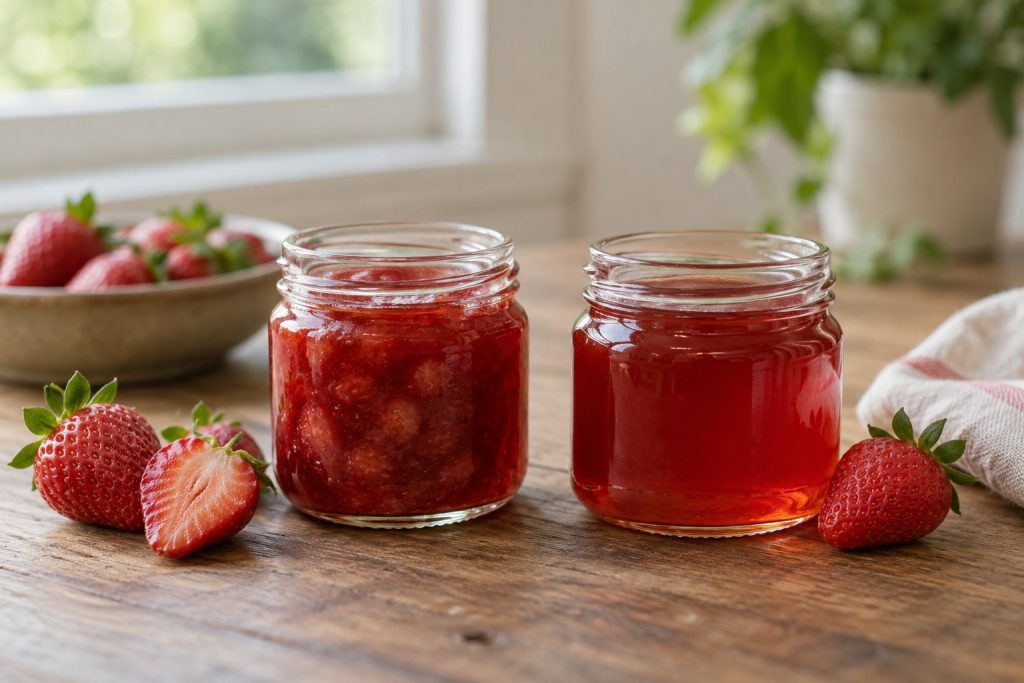
Expect different textures
The National Center for Home Food Preservation describes jam as a fruit spread with pulp and jelly as a clearer gel. Preserves often contain larger pieces. These distinctions help when choosing a smooth sandwich filling or a spread with more visible fruit.
Watch regional wording
The word jelly can refer to a gelatin dessert in other English-speaking settings. Read the product description when using an unfamiliar recipe. A fruit spread sold beside jams may also use a different formulation from a traditional jam or jelly.
Compare the same portion
Check total and added sugars, ingredients and serving size on the actual labels. A darker color or visible fruit pieces do not establish a lower-sugar product. Compare the amount you would spread on your toast rather than differently sized label servings.
Keep storage and preserving separate
Follow the jar’s directions after opening. If making preserves at home, use a tested recipe and process; changing sugar or thickener can change the required method. This texture comparison is not a canning recipe or evidence that a homemade jar is shelf stable.
Sources
National Center for Home Food Preservation; National Center for Home Food Preservation.
Related reading
Applesauce vs Apple Butter: A Purée and a Spread
Total Sugars vs Added Sugars: Reading a US Nutrition Label
Related reading
About this article: an introductory editorial draft. Not yet independently reviewed by a fitness professional.