Lemon Zest vs Juice: Aroma and Acidity Do Different Jobs
Lemon zest and lemon juice are not interchangeable. Zest is the colored outer peel and contributes aromatic oils. Juice contributes tartness and liquid. A recipe may deliberately use both for different purposes.
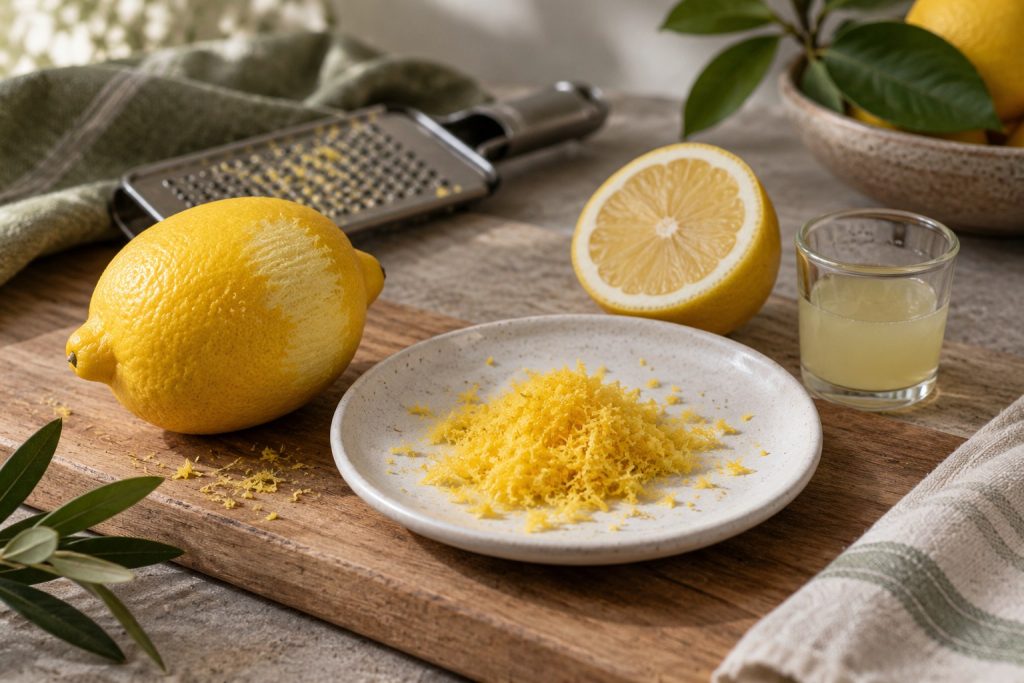
Grate the colored surface
Wash the lemon before preparing it, then remove the thin yellow layer with an appropriate grater. Avoid digging deeply into the white pith. Zesting the whole fruit before cutting it for juice is usually easier to handle.
Notice the liquid change
Adding juice in place of zest changes more than lemon flavor: it also adds liquid and acidity. That matters in a batter, icing or filling. Extra juice is not a reliable universal way to compensate for missing zest.
Read the exact ingredient
A recipe calling for a measured amount of juice does not mean the juice of any lemon, since fruit size varies. Likewise, lemon extract is another ingredient with its own concentration. Follow the named form and amount.
Choose an appropriate alternative
For a predictable bake, use the recipe author’s tested substitution or choose a recipe for the ingredient available. Keep preservation recipes separate: do not improvise acidity changes in canning instructions.
Sources
Related reading
About this article: an introductory editorial draft. Not yet independently reviewed by a fitness professional.