Almond Flour vs Wheat Flour: Why a Straight Swap Can Fail
Almond flour is ground almonds; wheat flour comes from wheat. Their different composition changes dough structure, moisture and texture, so replacing all wheat flour with the same amount of almond flour can change a recipe substantially. Start with a recipe designed for the flour you have.
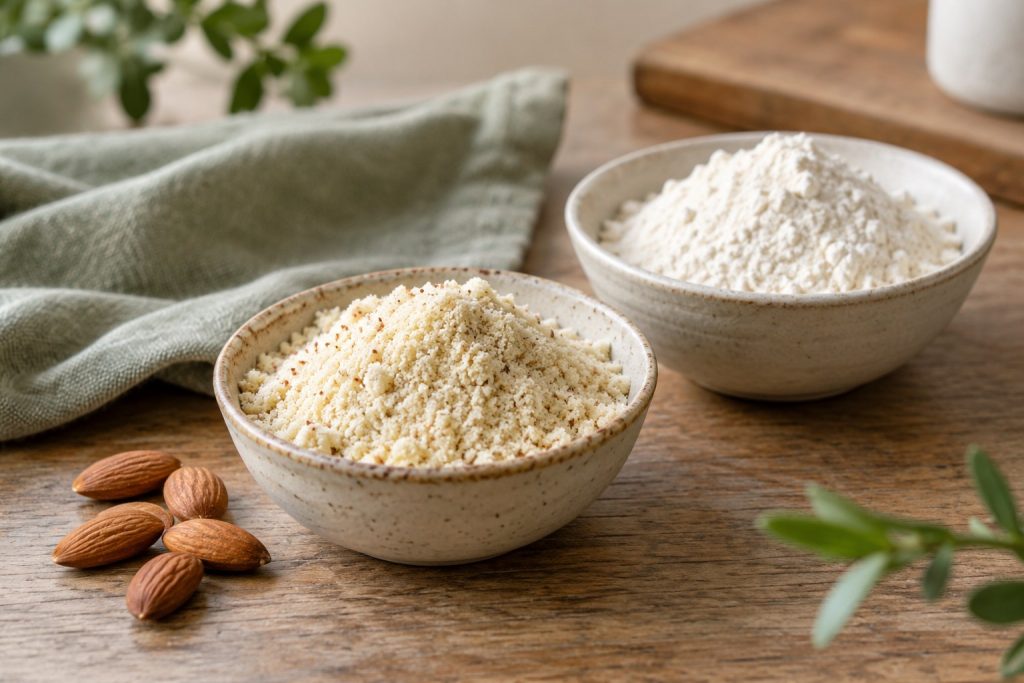
Check which almond product you have
Finely ground blanched almond flour differs in texture from coarser almond meal with skins. Some products are also partially defatted. Read the ingredients and description instead of treating every almond-based powder as the same baking ingredient.
Expect different structure
Wheat flour can develop gluten structure; almond flour does not provide that structure. King Arthur’s baking trials show that results vary by recipe. A substitution that works in a cookie is not automatically appropriate for a risen loaf or a delicate cake.
Use a tested change
Follow a recipe or substitution tested for the specific bake, including any changes to liquid or other ingredients. Measure as instructed, preferably by weight when weights are supplied. Equal spoonfuls of different flours do not necessarily weigh the same.
Keep dietary claims separate
Almond flour introduces a tree-nut allergen and is not automatically suitable for everyone avoiding wheat. Check the full label and any gluten-free claim needed. Compare nutrition for the amount used and the finished recipe, not the flour’s health-oriented marketing alone.
Sources
King Arthur Baking flour trials; King Arthur Baking almond flour.
Related reading
Buckwheat Groats vs Flour: Which Form Do You Need?
How to Use the Tare Button on a Kitchen Scale
Related reading
Almond Meal vs Blanched Almond Flour: Check Grind and Skins
Related reading
About this article: an introductory editorial draft. Not yet independently reviewed by a fitness professional.