Coconut Flour vs Almond Flour: Avoid a Straight Swap
Coconut flour and almond flour are not direct baking equivalents. Coconut flour absorbs a great deal of liquid, while almond flour has a different composition and behavior. Replacing equal volumes can change a batter substantially.
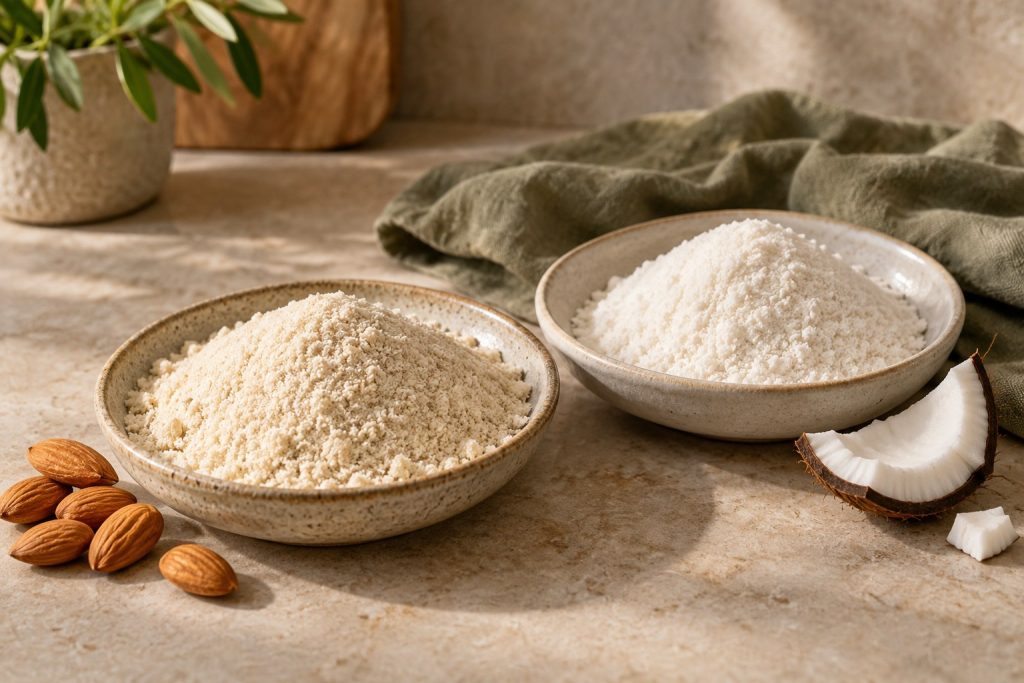
Read the product description
Check whether the bag contains coconut flour, ground almonds or a blended baking mix. Similar pale colors do not establish similar ingredients. A mix may already contain starches or other ingredients that the recipe accounts for.
Expect different liquid needs
Bob’s Red Mill advises using recipes specifically developed for coconut flour because of its high absorption. Do not try to rescue an unfamiliar substitution simply by pouring in liquid until the batter looks familiar.
Keep the whole recipe together
Eggs, liquid, flour and other ingredients contribute to the final structure. A conversion changes their relationship, not just the label on the flour bag. Use a tested alternative that specifies all necessary adjustments.
Measure and record
Use the recipe’s stated weights where available and record the exact product. Check allergen information and any required gluten-free labeling separately. Neither flour name alone guarantees that the finished recipe meets a particular dietary need.
Sources
Bob’s Red Mill — Coconut Flour; Bob’s Red Mill — Almond Flour.
Related reading
Almond Flour vs Wheat Flour: Why a Straight Swap Can Fail
Almond Meal vs Blanched Almond Flour: Check Grind and Skins
Related reading
Sweetened vs Unsweetened Shredded Coconut: Match More Than the Name
About this article: an introductory editorial draft. Not yet independently reviewed by a fitness professional.