Buckwheat Groats vs Flour: Which Form Do You Need?
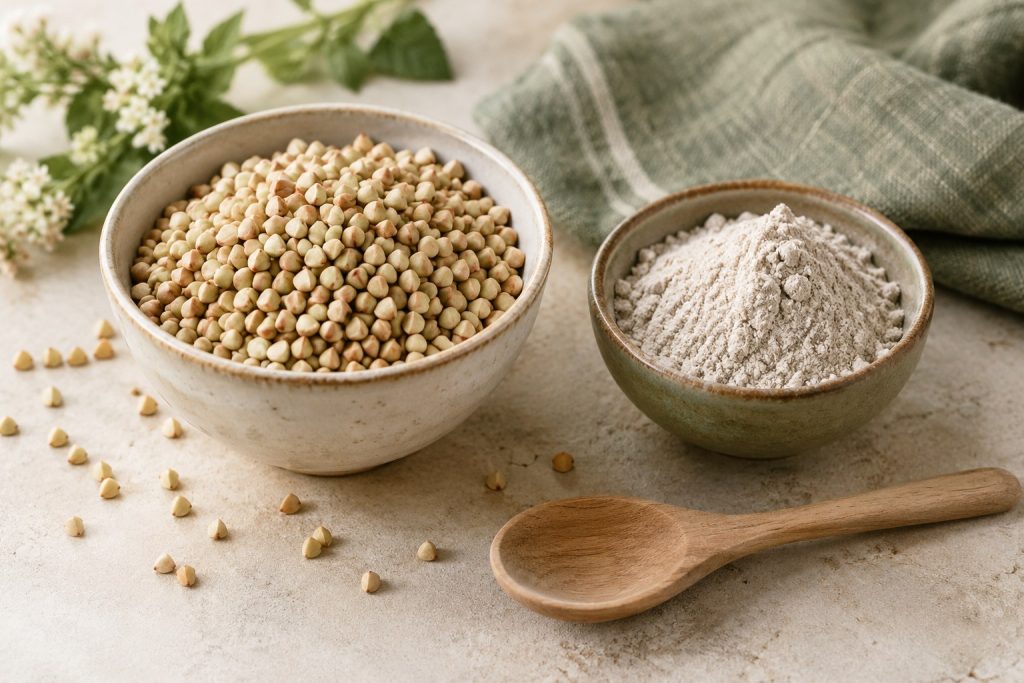
Buckwheat groats are hulled seeds used in dishes such as porridge or grain-style bowls; buckwheat flour is milled for batters and doughs. Despite its name, buckwheat is not wheat. These forms cannot simply replace each other in equal scoops.
Choose for the cooking method
Groats retain individual pieces when prepared appropriately; flour mixes into a batter or dough. Check whether groats are raw or roasted, because flavor and cooking instructions can differ. Follow the package rather than borrowing a method for a different form.
Do not assume wheat-flour behavior
Buckwheat flour does not supply wheat gluten. A wheat-bread recipe may need a tested blend or a different method, not an unplanned complete substitution. Use a recipe designed for buckwheat if you want predictable structure and texture.
Check the gluten-free claim
Buckwheat itself is naturally gluten-free, but a packaged product may have cross-contact or other ingredients. Bob’s Red Mill explicitly explains why one buckwheat flour is not labeled gluten-free. If avoidance is necessary, check the actual package instead of trusting the ingredient’s name.
Compare nutrition on the same basis
Use equal dry amounts when comparing dry labels. Water absorbed during cooking changes weight without making dry and cooked entries interchangeable. Note the exact product and preparation state when logging portions, and store the opened package according to its instructions.
Sources
Bob’s Red Mill; Bob’s Red Mill; Whole Grains Council.
Related reading
Couscous vs. Quinoa: Ingredients, Cooking, and Portions
Should You Weigh Food Raw or Cooked? Match the Food to the Entry
Related reading
About this article: an introductory editorial draft. Not yet independently reviewed by a fitness professional.