How to Wash Fruit and Vegetables Without Soap
FDA guidance recommends washing fresh produce under running water rather than using soap, detergent or commercial produce wash. Washing can reduce surface contamination, but it does not sterilize food or guarantee that every harmful organism is removed.
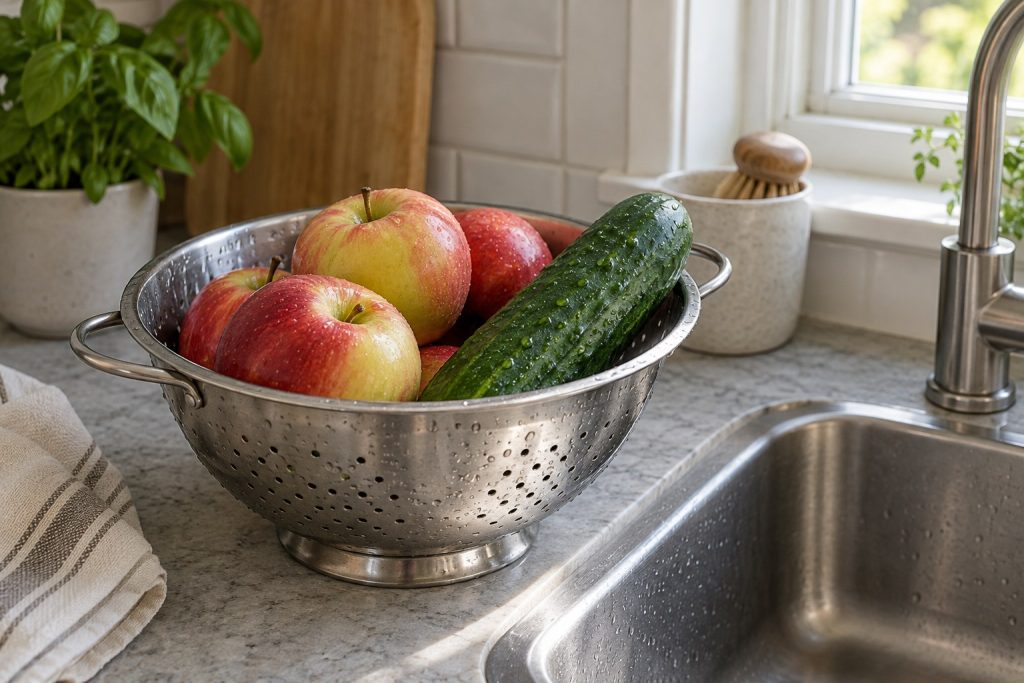
Start with clean hands and surfaces
Clean your hands, utensils and work area before handling produce. Keep fruits and vegetables separate from raw meat and its juices. A clean colander is useful; a dirty sink can transfer contamination back onto food you have just washed.
Wash before peeling or cutting
Rinse the outside even when you will discard the peel, because cutting can transfer material from the surface inward. Use a clean produce brush on firm items such as melons and cucumbers. Handle delicate berries gently, then dry with a clean towel.
Read ready-to-eat labels
Packaged produce labeled pre-washed or ready-to-eat can be used without washing again, according to FDA. Rewashing is not automatically safer if it introduces contact with dirty equipment. Follow any additional preparation or cooking instructions printed on the package.
Do not wash away a recall
Washing is not a remedy for recalled produce or rotten food. Follow recall instructions and discard spoiled items. Refrigerate produce that requires cold storage, especially products sold pre-cut. Plan small preparation batches so washed food is used without unnecessary storage or handling.
Sources
FDA.
Related reading
Fresh vs Frozen Berries: Buying, Texture, and Storage
Fresh vs Frozen Spinach: Match the Form to the Recipe
Related reading
Should You Wash Raw Chicken Before Cooking?
Related reading
About this article: an introductory editorial draft. Not yet independently reviewed by a fitness professional.