Should You Wash Raw Chicken Before Cooking?
USDA advises against washing or rinsing raw chicken. Splashes can spread contamination around the kitchen; washing is not the step that makes poultry safe. Safe handling and cooking to the recommended internal temperature matter instead.
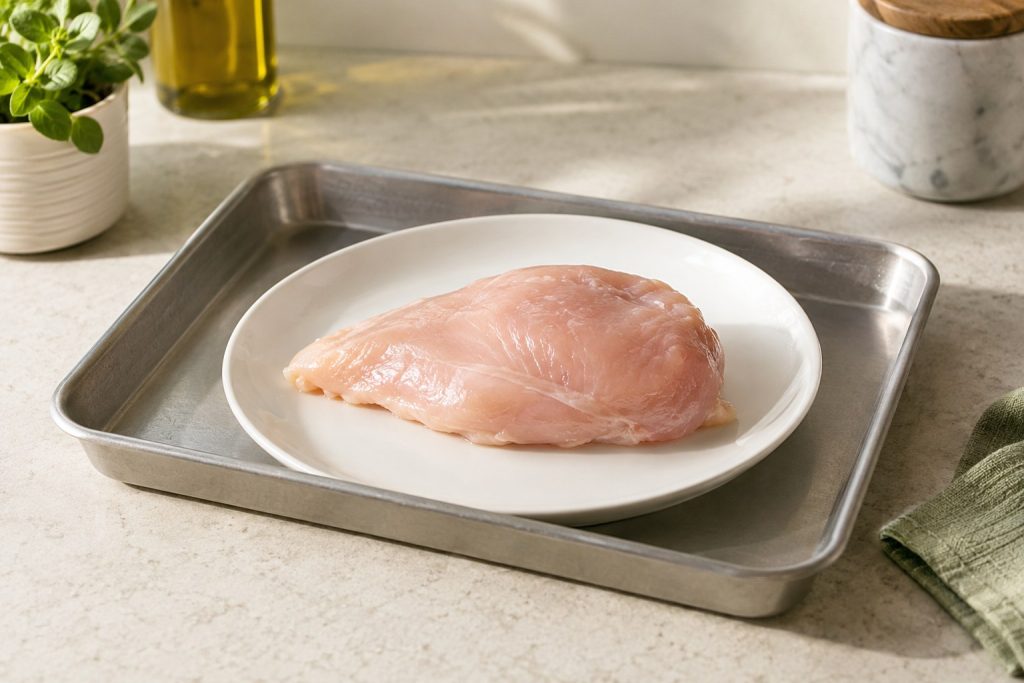
Keep raw juices contained
Open the package carefully and use a dedicated preparation area away from ready-to-eat foods. Put packaging directly in the appropriate bin. Avoid carrying a dripping piece of chicken across the counter or placing it beside salad ingredients.
Do not replace water with a soak
USDA does not recommend vinegar, lemon juice or saltwater as a way to make raw chicken safe. A marinade is a flavoring step, not a substitute for cooking. Follow safe marinating instructions and keep raw poultry refrigerated.
Check the cooked temperature
USDA recommends 165°F (74°C) for poultry, checked with a food thermometer. For pieces, check the thickest part without touching bone; for a whole bird, also check the innermost thigh and wing. Color alone is unreliable. Clean the probe after contact with raw or undercooked food before using it again.
Clean after preparation
Wash hands and clean utensils, boards and surfaces that contacted raw poultry or its juices. Keep cooked food off the unwashed raw-food plate. If splashing has already occurred, address the affected area rather than assuming the sink alone needs attention.
Sources
USDA FSIS; USDA FSIS; USDA FSIS.
Related reading
About this article: an introductory editorial draft. Not yet independently reviewed by a fitness professional.