Yoga Blanket vs Bolster: Different Ways to Add Support
A yoga blanket changes height and shape as you fold it, while a bolster is a filled cushion with a more defined shape. They can serve different support needs. Choose for the position and instruction rather than assuming the larger or softer prop is always better.
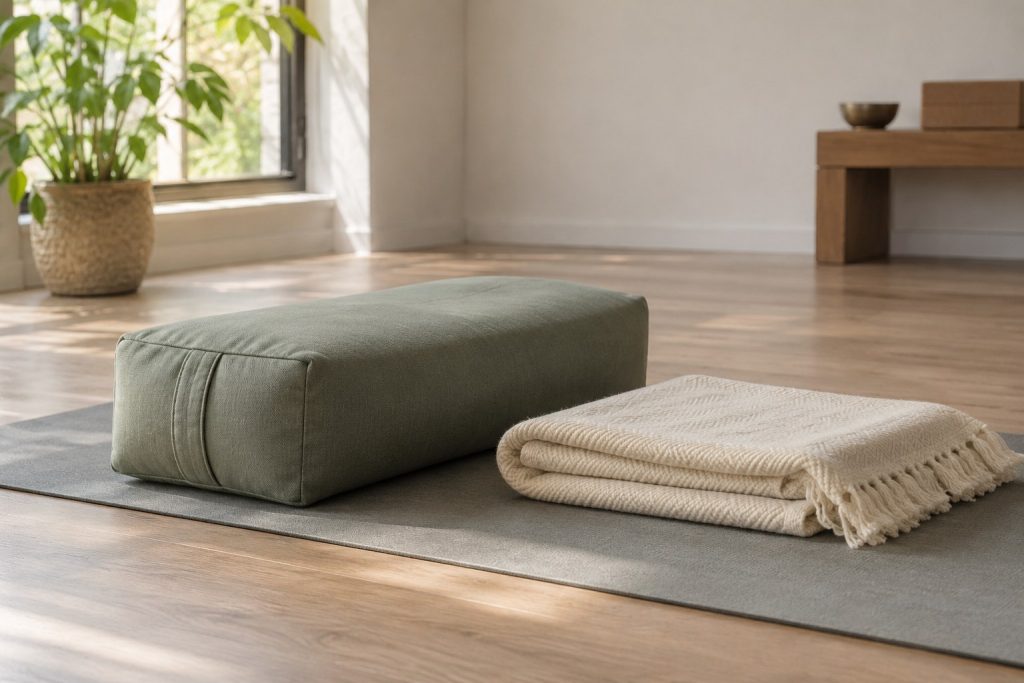
When is a blanket useful?
A blanket can provide a thin folded layer or a broader padded surface. Even folds matter: an uneven edge can create an uncomfortable lump. A loose pile does not behave like a stable block. Ask your teacher how to arrange it for the specific position.
What changes with a bolster?
Bolsters come in rectangular, round, and other shapes, with different fillings and firmness. A flat-sided model and a round one do not contact the body or floor in the same way. Compare dimensions and how much the cushion compresses, not just its appearance.
Match support to comfort
Try the prop in a gentle, instructed setup and adjust height rather than forcing yourself into a pose. More support does not mean you should seek a deeper stretch. Stop if the position causes pain, numbness, or restricted breathing; a prop does not make every pose suitable.
Consider care and storage
Check whether a bolster’s cover is removable and how both cover and filling should be cleaned. Follow the blanket’s wash instructions and dry it fully before storage. Measure the space available at home. Borrowing a studio prop first can clarify what shape you will actually use.
Sources
Related reading
Yoga Blocks for Beginners: Choosing and Using Support
Cork vs Foam Yoga Blocks: Firmness, Weight, and Fit
Related reading
Round vs Rectangular Yoga Bolsters: Choose the Support Shape
About this article: an introductory editorial draft. Not yet independently reviewed by a fitness professional.