Round vs Rectangular Yoga Bolsters: Choose the Support Shape
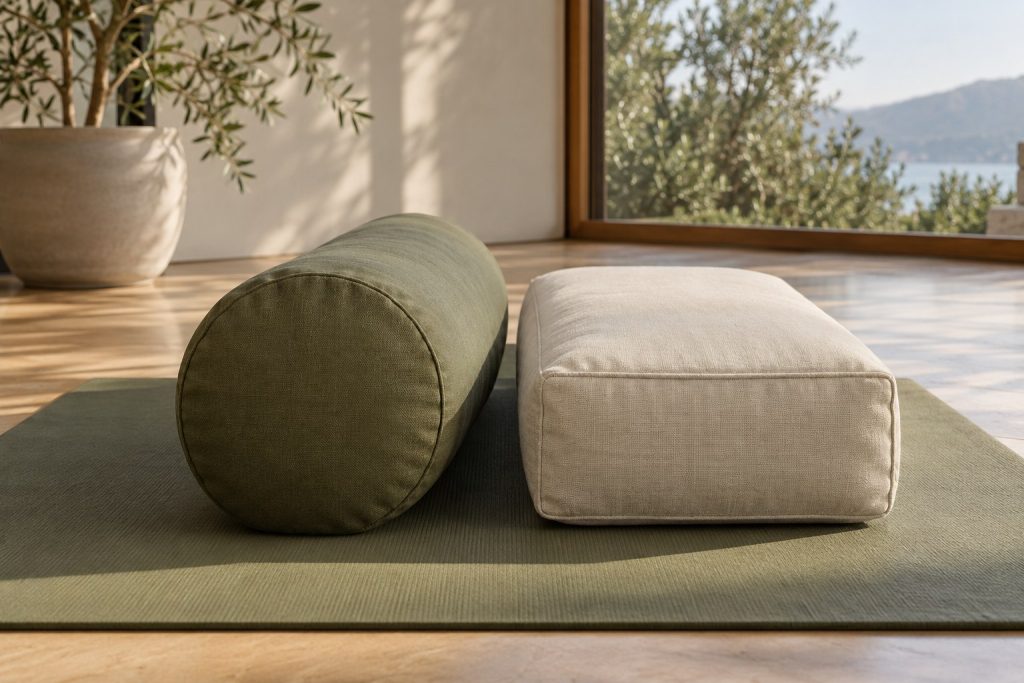
A round yoga bolster provides a curved support surface; a rectangular one provides a broader flat face. Shape affects placement, but height, filling, and firmness matter too. Neither shape is universally better for beginners.
Start with the intended position
Ask which prop the class or teacher expects and where it will be placed. A cylinder and a flat cushion of similar length can support the body at different heights. Do not assume they are interchangeable in every setup.
Compare actual dimensions
Check length, width, and height rather than relying on a product photograph. A rectangular bolster can also be turned onto another face, changing its height. Consider storage space and whether the prop fits on your mat.
Firmness is a separate detail
Manduka describes different support levels across its round, rectangular, and lean bolsters. That describes its products, not a universal rule for every shape. Filling and compression can make two similarly shaped cushions feel quite different.
Try a comfortable arrangement
Use the prop in a supported position without forcing a stretch. Adjust or stop if it causes pressure or discomfort. Check whether the cover is removable and follow its specific washing instructions; a washable cover does not mean the filling is washable.
Sources
Manduka — Bolster shapes and support.
Related reading
About this article: an introductory editorial draft. Not yet independently reviewed by a fitness professional.