Workout Timer vs Stopwatch: Count Up or Count Down?
A stopwatch measures how much time has passed. A countdown timer shows how much remains, while an interval timer can repeat work and rest periods automatically. The useful choice depends on the instructions in your workout, not on which app has the most features.
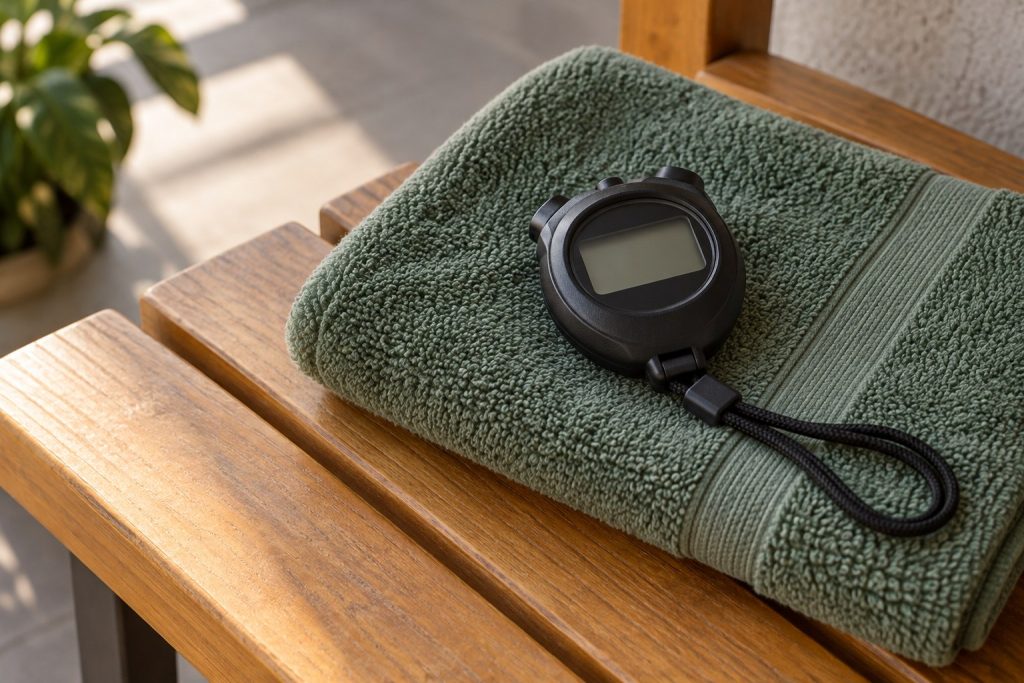
When is a stopwatch useful?
Use a stopwatch when you want to record elapsed time without committing to a finishing signal. Examples include timing an easy walk or recording how long a comfortable circuit takes. Lap or split buttons can mark sections without resetting the whole session. Decide whether a pause should stop the clock before comparing sessions.
When does a countdown work better?
A countdown is convenient for a planned rest or a task with a stated duration. Set the duration and check that the alarm is noticeable in your training environment. A signal is a reminder, not a reason to rush a movement or resume before you can safely continue. Adjust the plan when needed.
What does an interval timer add?
An interval timer can alternate work and recovery and repeat that sequence. Check whether preparation time, rest after the final round, and automatic repeats are included. A timed session is not automatically high-intensity exercise: the activity and effort still determine what you are doing. Enter the intervals from your actual plan.
What should you test before a workout?
Run a short trial while the phone is locked or the timer is in its usual position. Check sound, vibration, headphone behavior, and whether other apps interrupt alerts. Confirm minutes versus seconds and that pause or reset behaves as expected. Save a clearly named preset so an old workout does not silently supply the wrong timing.
Sources
Related reading
Interval vs. Continuous Training, Explained
Related reading
Moving Time vs Elapsed Time: Which Pace Are You Reading?
Related reading
EMOM vs AMRAP: What Does the Workout Clock Control?
Calculate a run–walk session and check its final walking interval
Use the circuit timing example to distinguish work, transitions and between-round rest.
Use the rest guide for a worked timeline and the difference between rest and start-to-start timing.
About this article: an introductory editorial draft. Not yet independently reviewed by a fitness professional.