Whole Milk Powder vs Nonfat Dry Milk: Read the Fat Before Baking
Whole milk powder retains milk fat, while nonfat dry milk has most of it removed. Both provide milk solids, but using the same weight does not create the same fat contribution. Match the type named in your recipe first.
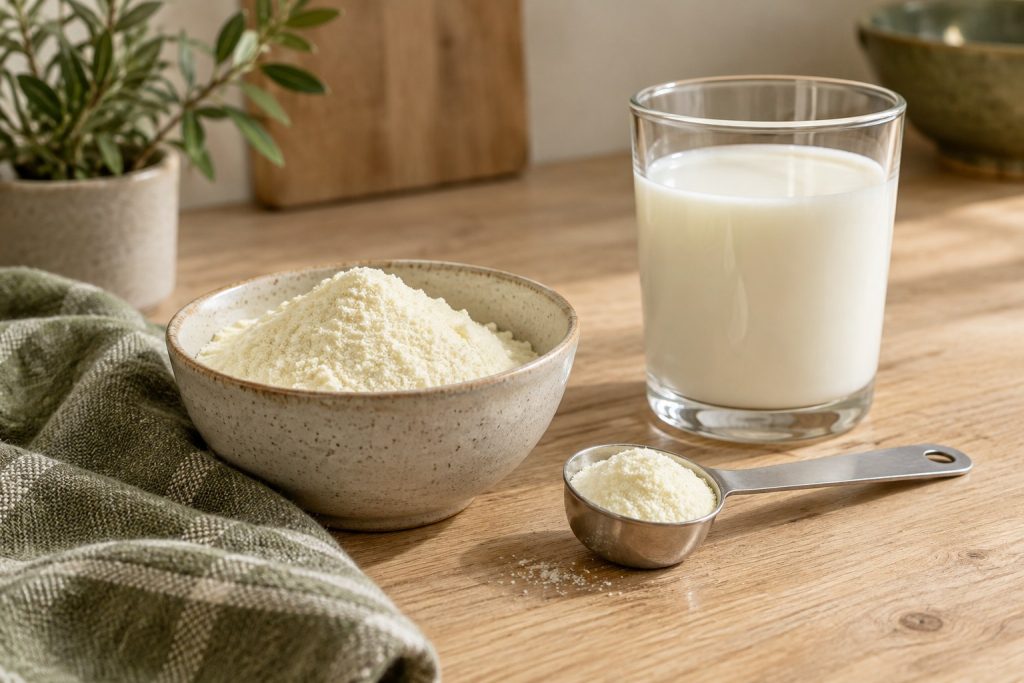
Check that it is actually milk powder
Read the ingredients rather than relying on a white powder’s appearance. Coffee creamers and flavored drink mixes can contain other fats, sugars or ingredients. They are not automatically substitutes for plain whole or nonfat milk powder.
Separate powder from prepared milk
A recipe asking for dry milk powder may expect it to be added dry. Drinking-milk instructions instead specify powder mixed with water. Follow the package’s reconstitution ratio when liquid milk is wanted; do not add unrequested water to a dough.
Think about the recipe’s fat balance
King Arthur’s baking discussion distinguishes full-fat and nonfat powders and reports different flavor preferences in tested applications. That does not establish one universal winner. Use recipe-specific substitution advice, especially when other fats are already carefully measured.
Compare labels on the same basis
Compare dry powder with dry powder, or milk prepared according to each package with prepared milk. Different dilution instructions change the serving being compared. Keep the powder dry and follow its storage directions; nonfat does not mean dairy-free or automatically lactose-free.
Sources
King Arthur Baking — Milk Powder; Bob’s Red Mill — Reconstituting Milk.
Related reading
Shelf-Stable vs Refrigerated Milk: What Changes After Opening?
About this article: an introductory editorial draft. Not yet independently reviewed by a fitness professional.