Wall Sits for Beginners: Choose a Manageable Depth and Hold
For a beginner wall sit, choose a knee bend you can hold while breathing normally and leave under control. Start the timer only after you settle into that position. There is no universal starting duration, and thighs parallel to the floor are not an entry requirement.
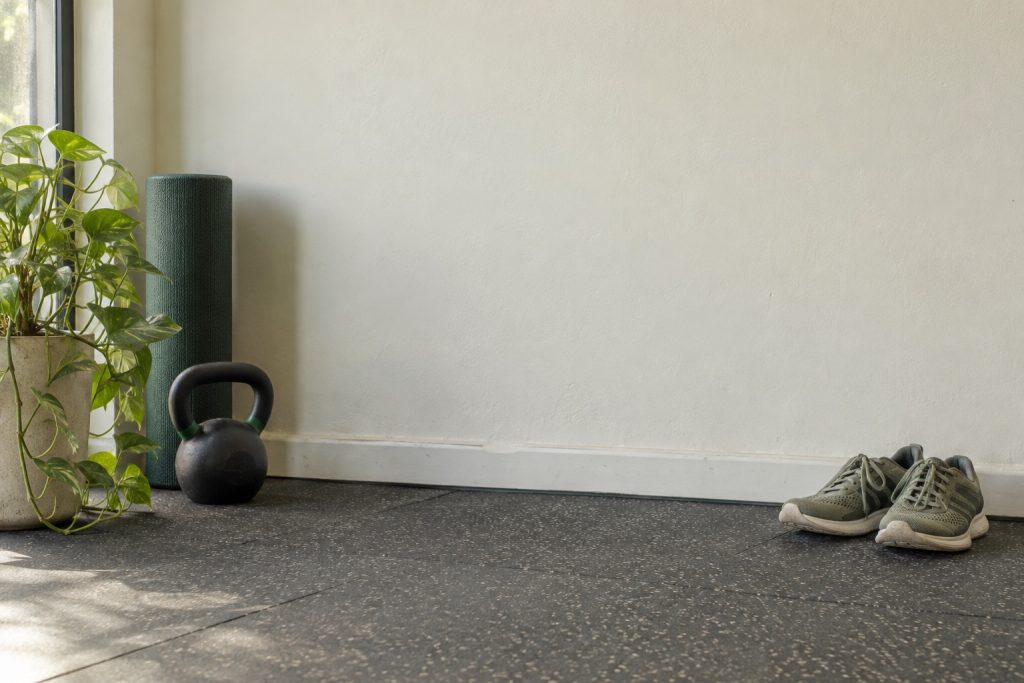
Set up, enter and leave the position
Use a solid wall with clear space around it and a floor and footwear that do not slip. Move nearby shoes, weights and other objects out of your exit route. Stand with your back supported, place your feet comfortably apart and move them forward enough to lower without losing support. Bend gradually; keep both feet planted and knees following the direction of your feet.
Before timing a hold, rehearse a shallow lowering and controlled return to standing. Slide up as you straighten your legs, adjusting foot position once stable if needed. If you cannot leave smoothly, make the position shallower or choose another exercise with guidance. Do not wait until your legs give way to discover how you will get up.
Choose a hold you can actually maintain
Choose a short, manageable attempt within your plan. Stop the timer when you leave the intended position, not after you finish standing up. End the attempt if your feet slip, your body slides or you need to hold your breath to continue. A stopwatch records seconds; it does not assess technique or decide your next target.
The NHS advises stopping if exercise causes pain and seeking medical advice; its routine is not intended for an existing knee injury. Do not use this page to diagnose or rehabilitate knee pain.
What changes the comparison?
A shallower and a deeper hold are different tasks. Cleveland Clinic describes adjusting depth or duration to change the challenge. You do not need to chase a particular angle. Record a repeatable description, such as “hips clearly above knees,” without presenting an unmeasured angle as precise.
| Observation | Useful next action |
|---|---|
| Feet or wall contact slip | End the hold and check the surface and setup before another attempt. |
| Depth changes during the hold | Record the change; do not label the whole time as the original position. |
| A longer time follows a shallower setup | Treat it as a different setup, not proof of improvement at the old depth. |
| Breathing becomes difficult to maintain normally | End the attempt; choose an easier task rather than forcing the planned seconds. |
Read a completed practice log
This invented log illustrates recording, not a workout prescription. Three holds were planned for 15 seconds each at the same chosen depth. The second and third ended earlier. Rest lasted 30 seconds between attempts; that is an example interval, not a recommendation.
| Attempt | Planned / completed | Note |
|---|---|---|
| 1 | 15 s / 15 s | Position maintained |
| 2 | 15 s / 12 s | Ended before sliding lower |
| 3 | 15 s / 10 s | Ended when position changed |
Completed hold time is 15 + 12 + 10 = 37 seconds, against 45 planned. The other 8 seconds were not completed; they are not a debt to make up. With two 30-second rests, holds plus rest total 97 seconds (1 minute 37 seconds), excluding getting into and out of position. Three separate holds are not a continuous 37-second hold.
What a wall sit does not replace
A wall sit is an isometric exercise: you sustain a position rather than count repeated lowering and rising. A moving squat practices movement through a range. Neither one replaces every lower-body task or establishes readiness for another exercise. The log total is a description of work, not a strength score or a calorie estimate.
A five-field practice record
Copy these fields into your workout log. Keep the same description next time when comparing like with like; note changes instead of hiding them.
- Date, wall/floor and footwear
- ____
- Foot position and approximate depth
- ____
- Planned and completed seconds for each hold
- ____
- Actual rest and any position changes
- ____
- Reason for ending and decision for next time
- ____
Choose the next step
Repeat the setup first. If your plan calls for a change, alter one feature at a time and record it: duration, depth or number of holds. Increasing all three makes the comparison harder to interpret. Repeating a manageable attempt is also a useful choice; there is no requirement to set a daily best. Do not add weights just because the cover includes a kettlebell.
Related resources
About this article: an introductory editorial draft. Not yet independently reviewed by a fitness professional.