Unilateral and Bilateral Exercises: How to Count Reps per Side
A unilateral exercise trains one side at a time; a bilateral exercise uses both sides together. A single-arm row is a familiar unilateral example. A squat performed on two legs is a familiar bilateral example.
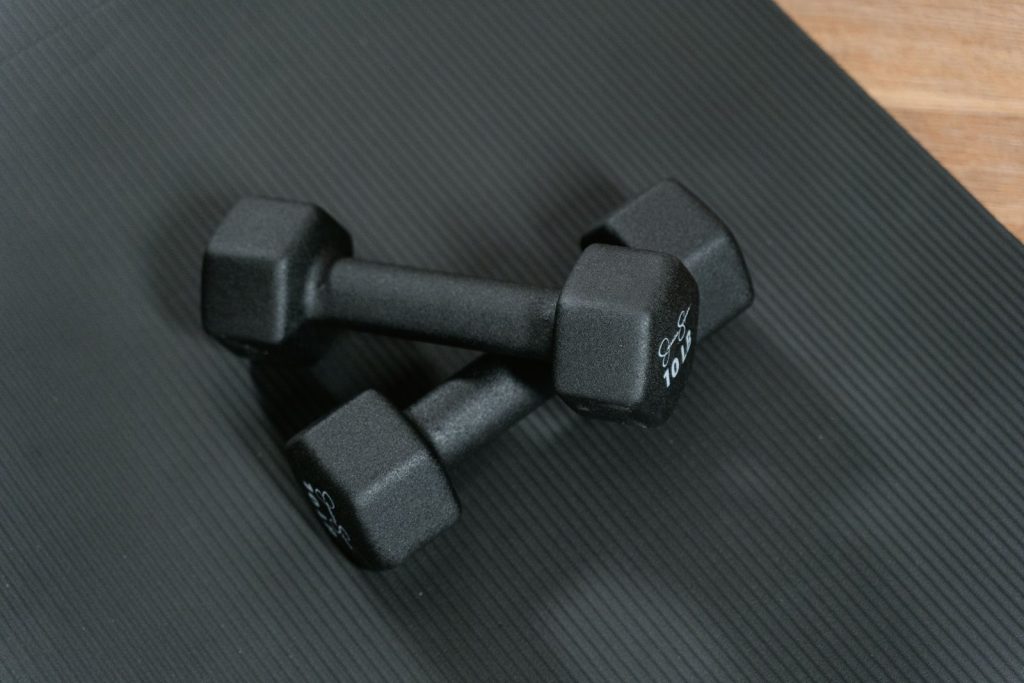
What do these labels describe?
The distinction concerns how the sides are used, rather than the number of muscles involved. ACE lists single-arm rows and presses among unilateral exercises and contrasts them with bilateral movements such as squats. Read ACE’s overview of unilateral training.
A one-sided exercise can still involve several joints. “Unilateral” is therefore not another word for isolation. Likewise, “bilateral” does not automatically mean a barbell is required.
Does ten reps mean ten per side?
Only the instructions can answer that. Compare two fictional entries:
- 10 total alternating repetitions: five on each side if the sequence is even.
- 10 repetitions per side: ten on the left and ten on the right, twenty altogether.
The printed number is the same, but the total differs. The word “alternating” explains the order, not necessarily the total. “10 alternating” still needs clarification if the author has not defined the counting convention.
What counts as a set?
A worksheet might define one set as completing both sides, or it might give each side its own line. Consider a fictional instruction of “two sets, six per side.” An unambiguous log could contain set one: left six, right six; set two: left six, right six.
That record preserves four side-specific counts without claiming the worksheet asked for four sets. Our sets and reps guide explains the basic grouping; the plan’s convention supplies the side detail.
Where does the rest go?
Check whether the listed rest comes between sides, after both sides, or both. “Left → right → rest” and “left → rest → right → rest” are different arrangements even if their repetition counts match.
When recording a session, keep separate entries if the sides differed: “left eight, right seven” communicates more than “about eight.” It is a record of that set, not a diagnosis of an imbalance or a reason to prescribe extra work yourself. See how to keep a workout log for ways to preserve those details.
Check the app’s counting convention
The Moves App distinguishes “per side” from total counts. Freeletics explains its own “each side counts as one” label. These are platform-specific instructions, not a universal rule for every training plan. Moves App; Freeletics.
Three instructions that look similar but differ
For this illustrative table, one set includes both sides. Each alternating sequence starts on the left and continues left, right, left, right. These are counting examples, not a recommended number of repetitions.
| Instruction | Each set | Across 2 sets |
|---|---|---|
| 2 sets × 6 per side | Left 6, right 6 | 24 total |
| 2 sets × 12 total, alternating | Left 6, right 6 | 24 total |
| 2 sets × 6 total, alternating | Left 3, right 3 | 12 total |
The first two rows have the same number of repetitions. They do not establish that the sessions have the same difficulty: exercise, load, order and rest still matter. Never double a total count simply because two sides are involved.
What if the total is an odd number?
Nine total repetitions in strict alternation give five to the starting side and four to the other. That is arithmetic, not an instruction to add an extra repetition or always start on a particular side. If an equal split is intended but the number is odd, clarify the plan rather than silently changing it.
Record what happened, not just the target
Suppose the target was two sets of six per side. This fictional record shows that the second set ended one repetition short on the right:
| Set | Left | Right |
|---|---|---|
| 1 | 6 | 6 |
| 2 | 6 | 5 |
The target was 24 combined repetitions; the completed count is 23: 12 left and 11 right. Keep the individual entries. Do not round the record to “2 × 6” or diagnose a strength imbalance from this example. Add a short note about any change in load, setup or rest.
A clear instruction card to copy
- Exercise: ___
- Sets: ___
- Repetitions: ___ per side / ___ total (choose one)
- Order: alternate / finish one side first
- Rest: between sides / after both sides / both; duration ___
- Load: ___; state whether the number is per hand or combined
Use the card to resolve unclear notation before you start. For the rest of a workout’s shorthand, see how to read a workout plan.
Compare two lower-body options
See our guide to split squats versus lunges for practical examples and the limits of the general guidance.
About this article: an introductory editorial draft. Not yet independently reviewed by a fitness professional.