Sports Drinks vs. Energy Drinks: Read the Label Before a Workout
Sports drinks generally provide fluid and electrolytes, often with carbohydrate; energy drinks commonly contain caffeine and are marketed for alertness. The names are not interchangeable, and individual products vary. Check the ingredients, nutrition information, and caffeine amount before deciding what fits your workout.
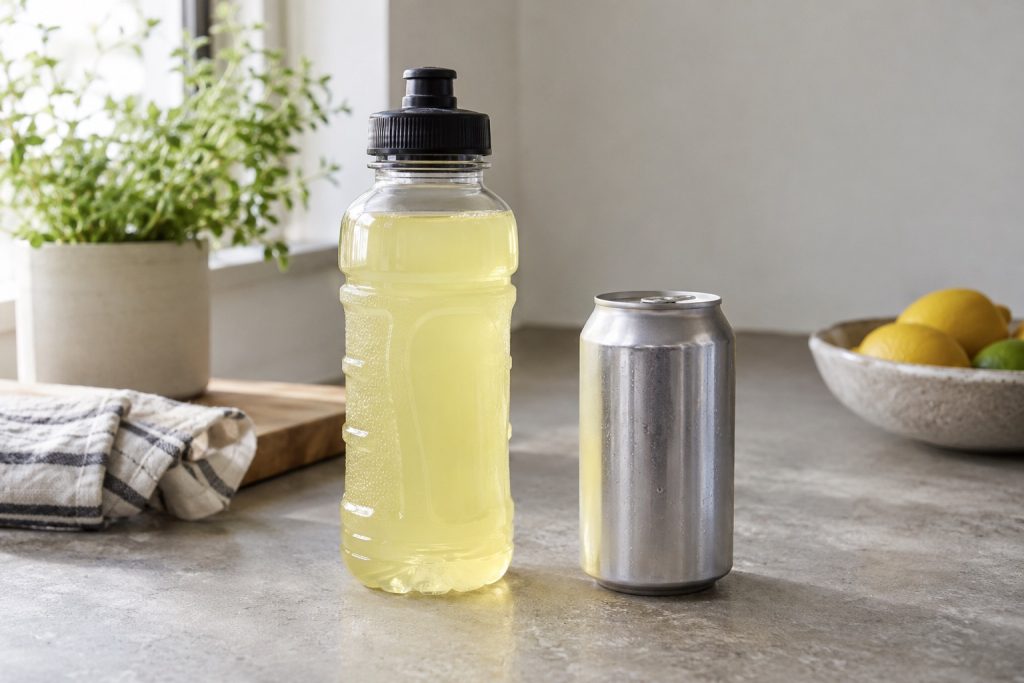
What is the main difference?
The Government of Québec distinguishes sports drinks from energy drinks by their intended use and composition. A stimulating effect is different from supplying fluid or carbohydrate during exercise.
| Label detail | What it tells you |
|---|---|
| Carbohydrate | Whether the drink contributes carbohydrate fuel. |
| Sodium and other electrolytes | Which minerals it provides and in what amounts. |
| Caffeine | Whether it adds a stimulant and how much. |
| Serving size | Whether the values cover the whole container. |
Do you need a sports drink for every workout?
No. A brief, ordinary session does not automatically require a specialized drink. Duration, intensity, heat, sweat losses, and food intake affect the decision. Read our workout-electrolyte guide before assuming every sweaty session calls for the same product.
Separate the question you are trying to answer. Do you need accessible fluid, carbohydrate during prolonged activity, or help planning meals around training? One bottle may address some of those needs without being necessary for all of them.
Why check caffeine separately?
The FDA notes that caffeine content varies substantially between energy drinks. Include other sources, such as coffee or pre-workout products, when considering your total. Individual sensitivity and medical circumstances matter, and energy drinks are not recommended for children and teens.
Do not stack products simply because each has a different name. Our caffeine-before-exercise guide explains why timing, sleep, and tolerance belong in the decision.
How do you compare two labels?
Use the amount you will actually drink. In an illustrative example, a container with two servings and 80 milligrams of caffeine per serving supplies 160 milligrams if you finish it. A second product labeled per whole can may look stronger even when the total is lower.
The same arithmetic applies to carbohydrate and sodium. A zero-sugar energy drink may contain caffeine but provide little or no carbohydrate fuel. An electrolyte drink can also be carbohydrate-free, so the word “electrolyte” does not establish its fuel content.
What is a useful final check?
Match the ingredients to the session, consider your usual food and drinks, and avoid using a stimulating product to ignore exhaustion or heat symptoms. For meal planning around exercise, see what to eat before a workout.
About this article: an introductory editorial draft. Not yet independently reviewed by a fitness professional.