Ricotta vs Cottage Cheese: Texture Before Substitution
Ricotta usually has a finer, softer grain, while cottage cheese has more distinct curds in a moist dressing. They can sometimes substitute for each other, but the texture and moisture may change the dish. Start with what the recipe needs rather than assuming both white cheeses are identical.
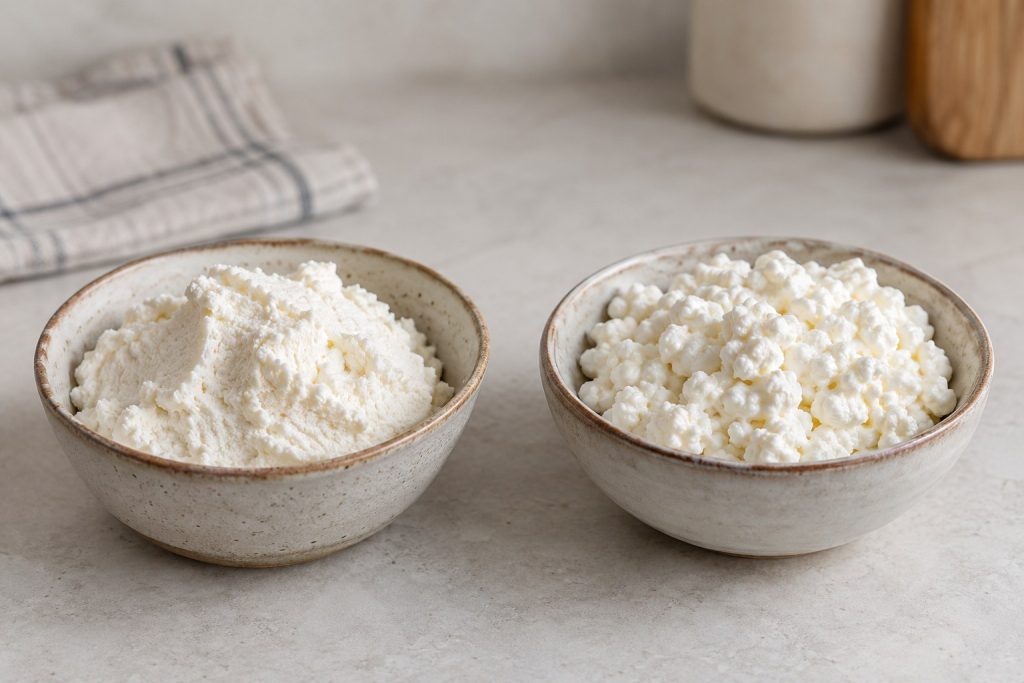
Check the actual product
BelGioioso describes its ricotta as creamy and mild; Daisy describes separate cottage-cheese curds coated in dressing. Those examples do not cover every formulation. Fat level, curd size and added ingredients can vary, so read the package you have.
Consider the role in the recipe
A spread, a cold bowl and a baked filling ask different things of the cheese. Distinct curds may remain noticeable in a smooth filling. Blending cottage cheese changes texture, but does not automatically reproduce ricotta’s moisture or composition.
Use a tested substitution
If a recipe permits a swap, follow its draining, blending and quantity instructions. Extra liquid can matter in baked dishes. For a recipe where structure is important, use a tested version instead of changing the cheese and hoping identical amounts behave identically.
Compare portions and storage
Compare protein, fat and sodium at the same weight, using the actual labels. Neither name alone guarantees the higher-protein choice. Keep refrigerated as directed and follow use-after-opening guidance; changing a cheese in a recipe does not extend its storage life.
Sources
Related reading
Cottage Cheese vs. Greek Yogurt: Compare Your Actual Portion
Fresh vs Low-Moisture Mozzarella: Choose for the Dish
Related reading
Block vs Whipped Cream Cheese: Which One Belongs in the Recipe?
About this article: an introductory editorial draft. Not yet independently reviewed by a fitness professional.