Block vs Whipped Cream Cheese: Which One Belongs in the Recipe?
For a US recipe that specifies block cream cheese, use that form unless the author gives a tested substitution. Soft or whipped spreads are distinct products. A similar flavor does not establish that they will give the same texture in a cheesecake or frosting.
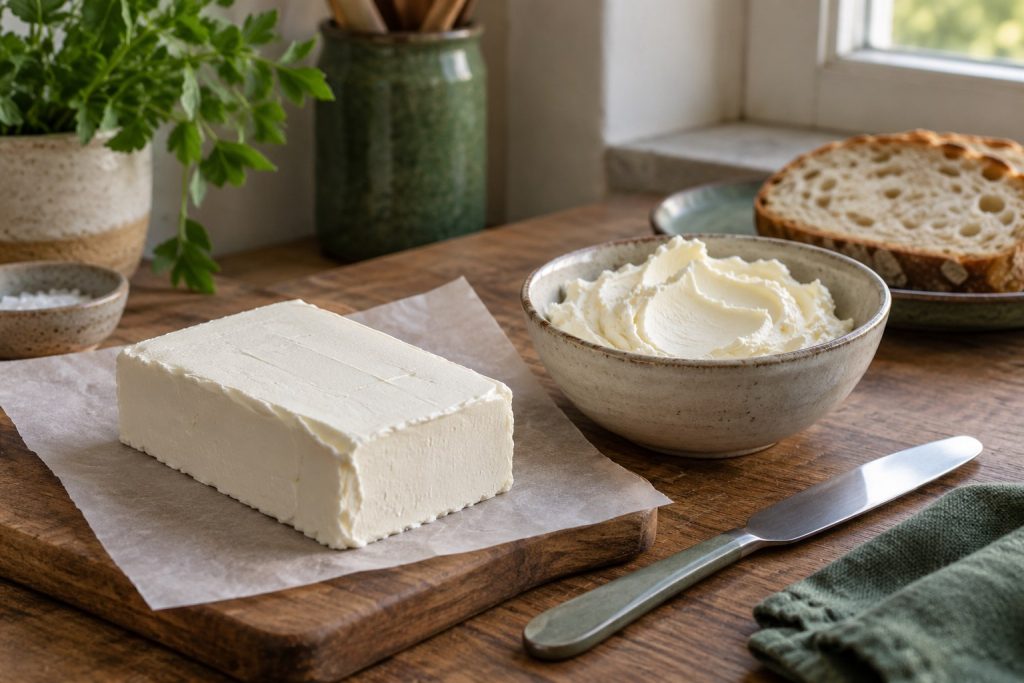
Read the product description
Philadelphia describes its US brick cream cheese as primarily intended for cooking and baking, and its soft spreads as designed for easier spreading. Its range also includes whipped products. Check the exact name rather than treating every container as the same ingredient.
Separate softening from swapping
A recipe asking for softened block cream cheese usually means preparing the specified ingredient at the intended temperature. Philadelphia explains that softening helps it blend without lumps. Buying a different spread is not automatically the equivalent preparation step.
Compare by weight
Follow the recipe’s weight and product form. A spoonful or container size is a weak basis for comparing a dense block with a whipped product. Check label serving weights when comparing nutrition too, rather than assuming equal volumes contain equal amounts.
Allow for regional differences
Packaging and formulations vary by country; a tub alone does not identify a US-style spread. Outside the US, use the recipe author’s local product advice. If only a different product is available, choose a recipe developed for it rather than promising an exact substitution.
Sources
Related reading
Ricotta vs Cottage Cheese: Texture Before Substitution
Half-and-Half vs Heavy Cream: Can the Recipe Still Work?
Related reading
Mascarpone vs Cream Cheese: Check the Recipe Before Swapping
About this article: an introductory editorial draft. Not yet independently reviewed by a fitness professional.