How to Store and Care for Resistance Bands
Resistance bands last best when they are stored without tension and checked before use. Keep them away from direct sunlight, extreme temperatures, and sharp objects. Cleaning instructions depend on the material, so the manufacturer’s guidance comes first.
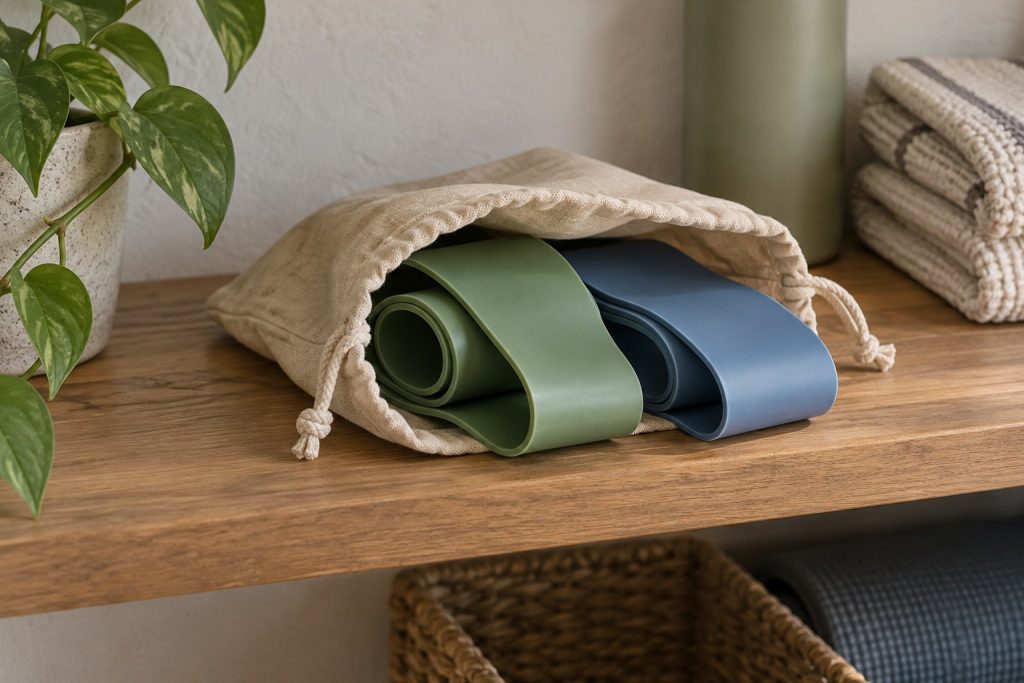
Where should resistance bands be stored?
Choose a cool, dry place indoors. Let a cleaned band dry before putting it in a pouch or drawer, and keep it separate from sharp clips, keys, and rough equipment edges. Avoid leaving it stretched around a rack or packed tightly against a hot window. A loose roll makes it easier to inspect when you unpack it.
What should you check before each workout?
Look along the entire band for cuts, nicks, tears, and changes in the material. Check handles, seams, connectors, and anchors when present. If something looks damaged, stop using that item and follow the maker’s replacement guidance. Tape or a knot is not a reliable repair for a band that will be stretched under load.
How should you clean a resistance band?
Follow the product’s care label for cleaning products, water temperature, and drying. Latex, nonlatex rubber, fabric loops, and covered tubes may need different treatment. Do not assume a gym disinfectant, washing machine, or alcohol wipe is suitable for every band. If instructions are missing, ask the manufacturer before trying a strong cleaner.
Does good storage make every band suitable?
No. Use the band within its stated stretch limits and with an appropriate anchor. Check its material if you need to avoid latex. Inspect it again after it catches on an edge or gets trapped under equipment. Storage and care support normal use; they do not turn a damaged band into a dependable one.
Sources
THERABAND / Performance Health; CanDo.
Related reading
Loop Bands vs. Resistance Tubes: Choose by the Exercise
Resistance Band Colors: How to Choose the Right Level
Related reading
How to Check a Door Anchor Before Using Resistance Bands
Related reading
Fabric vs Rubber Resistance Bands: Compare the Actual Loop
Resistance Band Colours: Read the Product, Not Just the Colour
About this article: an introductory editorial draft. Not yet independently reviewed by a fitness professional.