How to Check a Door Anchor Before Using Resistance Bands
Use a door anchor only with the door, band and installation method its manufacturer permits. A closed door is not automatically a suitable anchor point. Check the whole setup before putting the band under tension.
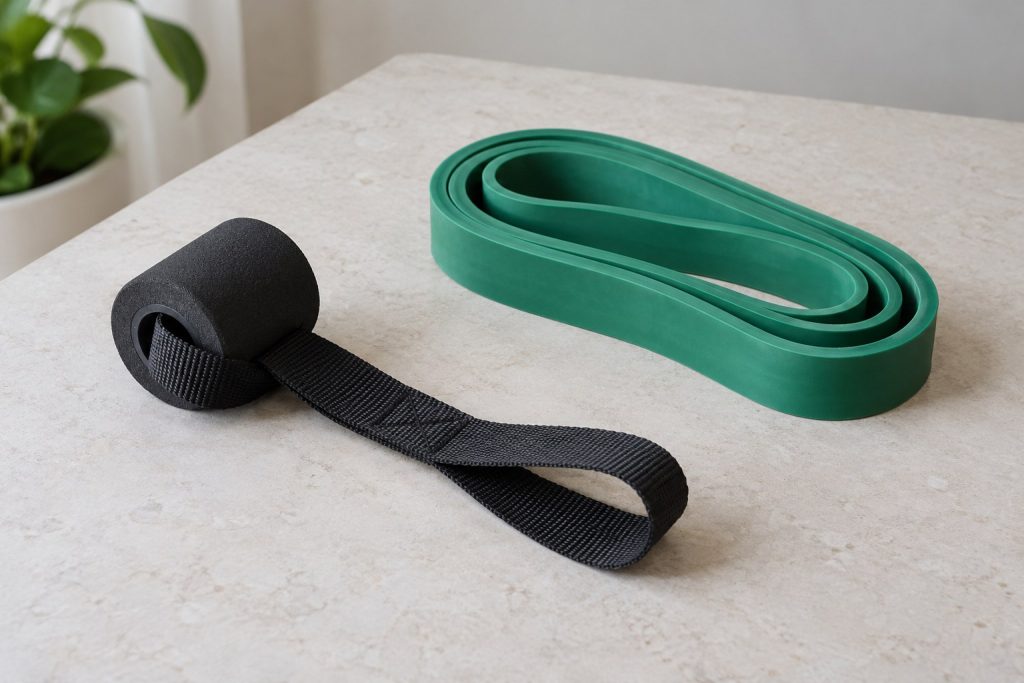
Inspect the parts
Look for tears, fraying, cracked rubber and worn stitching, especially where the band meets the anchor. Replace damaged components instead of taping over them. Check that the band and accessory are compatible; a similar-looking loop is not proof of a suitable connection.
Confirm the door and direction
Follow the product instructions for door type, anchor height and which side to use. THERABAND guidance specifies the side where you pull the door shut, so the exercise pull keeps it closed. Do not improvise on glass, sliding or damaged doors unless the system explicitly permits that setup.
Prevent unexpected opening
Close and secure the door as instructed and tell others not to open it during use. Check the latch and surrounding frame. Apply a small, controlled test pull before exercising. Stop if the anchor shifts, the door moves or the connection feels uncertain.
Respect the equipment limits
Follow stretch limits and any eye-protection guidance from the band maker. Keep your face out of the possible recoil path, and do not release a stretched band suddenly. If you cannot establish a suitable anchor, choose an exercise that does not require one. The cover is an equipment illustration, not an installation diagram.
Sources
Performance Health / THERABAND.
Related reading
About this article: an introductory editorial draft. Not yet independently reviewed by a fitness professional.