Pre-Shredded vs Block Cheese: What Should You Compare?
Pre-shredded cheese is already cut into shreds; block cheese lets you grate the amount and size you need. Ingredient lists can also differ. The format alone does not tell you the cheese’s variety, moisture level or exact behavior in a recipe.
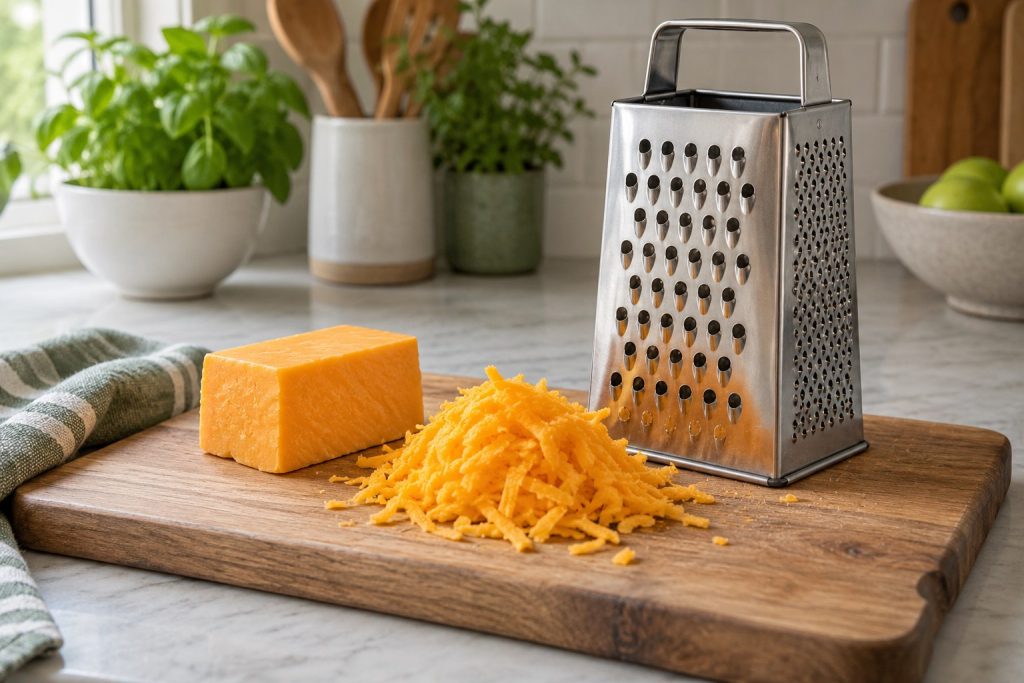
Read the ingredients on that product
Tillamook’s retail sharp cheddar shreds list potato starch and natamycin alongside the cheese ingredients. Its cited foodservice white cheddar shreds have a different list. These examples show why you should check the exact package rather than assume all shredded cheeses share one formula.
Match the recipe’s cheese first
A change from one cheese variety to another is more than a change in format. Start with the requested style and then check whether the recipe specifies freshly grated cheese. Follow a tested method when a smooth sauce or particular texture matters.
Use a consistent measurement
Loose shreds and a compact block occupy space differently. If the recipe gives a weight, weigh the required amount rather than comparing how full a bowl looks. With volume instructions, use the author’s stated method and avoid silently changing how tightly you pack the shreds.
Choose for the task
Ready-shredded cheese can reduce preparation work; a block gives control over cutting size. Neither option is automatically best for every dish. Record the product used when comparing results, and follow its storage instructions rather than inferring them from the shape.
Sources
Related reading
Fresh vs Low-Moisture Mozzarella: Choose for the Dish
Block vs Whipped Cream Cheese: Which One Belongs in the Recipe?
About this article: an introductory editorial draft. Not yet independently reviewed by a fitness professional.