Polarized Sunglasses vs UV Protection: Check Both Labels
Polarization and UV protection are different properties. Polarized lenses help reduce reflected glare, but the word polarized alone is not proof of adequate UV protection. For outdoor activity, check an explicit UV-protection claim and a comfortable fit.
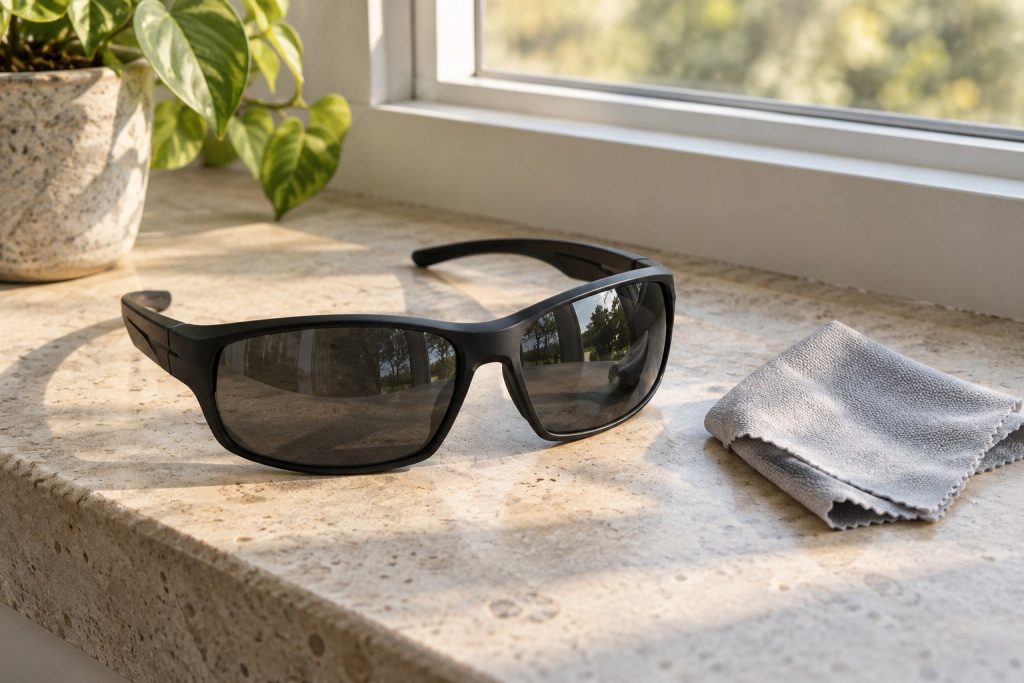
Start with UV protection
The American Academy of Ophthalmology recommends sunglasses labeled 100% UV protection or UV400. Do not judge that protection by lens darkness, price or a mirrored finish. If the protection is unclear, ask a qualified optical professional to assess the glasses.
Use polarization for glare
The National Eye Institute notes that polarized lenses can reduce glare from water or snow. That can improve viewing comfort, but it is a separate feature from blocking UV. Compare the two claims independently rather than assuming one guarantees the other.
Check fit and coverage
Try the glasses while looking down and turning your head. They should stay comfortably in place without excessive pressure. The National Eye Institute advises a good fit that limits light entering around the lenses; a suitable hat can add shade.
Match the eyewear to the activity
Ordinary sunglasses are not automatically impact-rated sports protection. If your activity involves a ball, racket or flying debris, ask about the appropriate protective eyewear. Keep lenses clean according to their care instructions and replace damaged eyewear that no longer works properly.
Sources
American Academy of Ophthalmology; National Eye Institute.
Related reading
Exercise in Hot Weather: Adjust the Workout Before You Start
Hiking vs. Walking: What Changes When You Leave the Pavement?
About this article: an introductory editorial draft. Not yet independently reviewed by a fitness professional.