Hiking Boots vs Trail-Running Shoes for a Day Walk
Hiking boots commonly offer a more substantial upper and structure; trail-running shoes commonly prioritize lower weight and flexibility. Either may work for some walks. The route, conditions, load and fit matter more than declaring one category universally best.
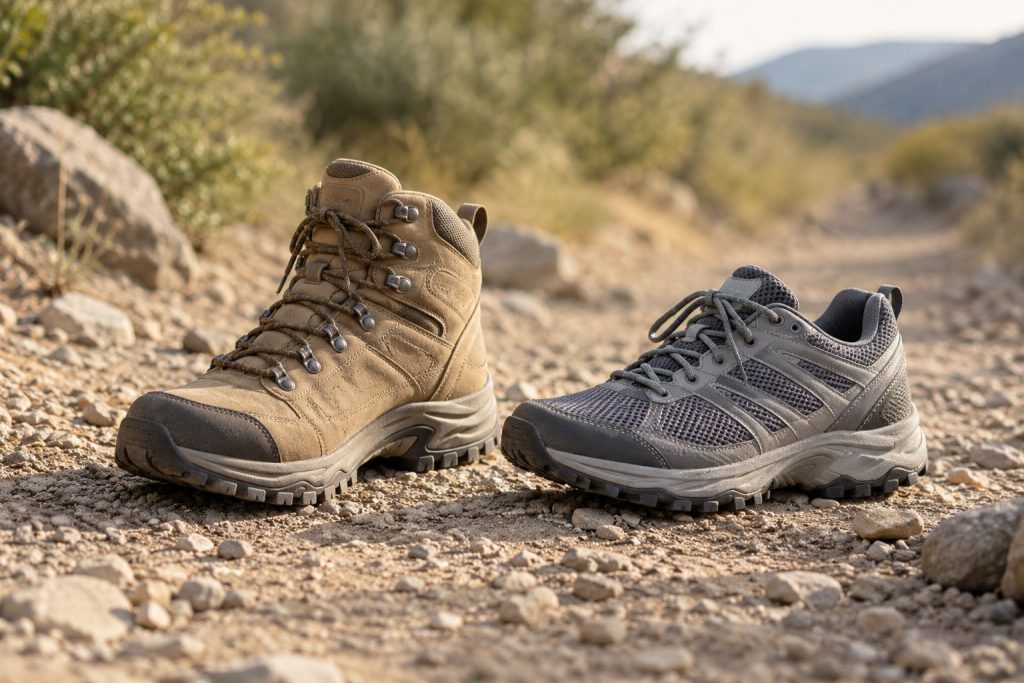
Start with the route
REI’s comparison considers terrain and carrying load alongside personal preferences. A maintained path with a light pack is different from rough terrain with a heavier load. Check the actual sole, toe protection and construction; category names hide considerable variation.
Think about wet conditions
Waterproofing and breathability are product-specific, not guaranteed by boot height. Consider rain, wet grass, water crossings and how footwear dries afterward. Do not assume a low shoe is non-waterproof or that a high boot cannot fill with water.
Check fit while moving
Try the footwear with the socks you expect to wear. Walk uphill and downhill where a fitting area allows, checking heel movement and toe space. A secure fit should not require crushing your foot with the laces. Test new footwear on a short familiar outing.
Avoid safety promises
A high collar does not make a walk injury-proof, and a light shoe does not remove fatigue. If existing foot or ankle problems affect your choice, seek individual advice. For technical winter or mountaineering routes, use equipment guidance specific to those conditions.
Sources
Related reading
Hiking vs. Walking: What Changes When You Leave the Pavement?
How to Choose Socks for Long Walks
Related reading
What Do Hiking Gaiters Do, and Do You Need Them?
Related reading
Running Shoe Lugs: Why Mud and Pavement Need Different Tread
About this article: an introductory editorial draft. Not yet independently reviewed by a fitness professional.