Goblet Squats: How to Start with One Dumbbell or Kettlebell
A goblet squat uses one dumbbell or kettlebell held close to the chest with both hands. Choose a load you can bring into position, hold securely, squat with and put down under control. The first useful goal is a repeatable movement, not a particular weight or depth.
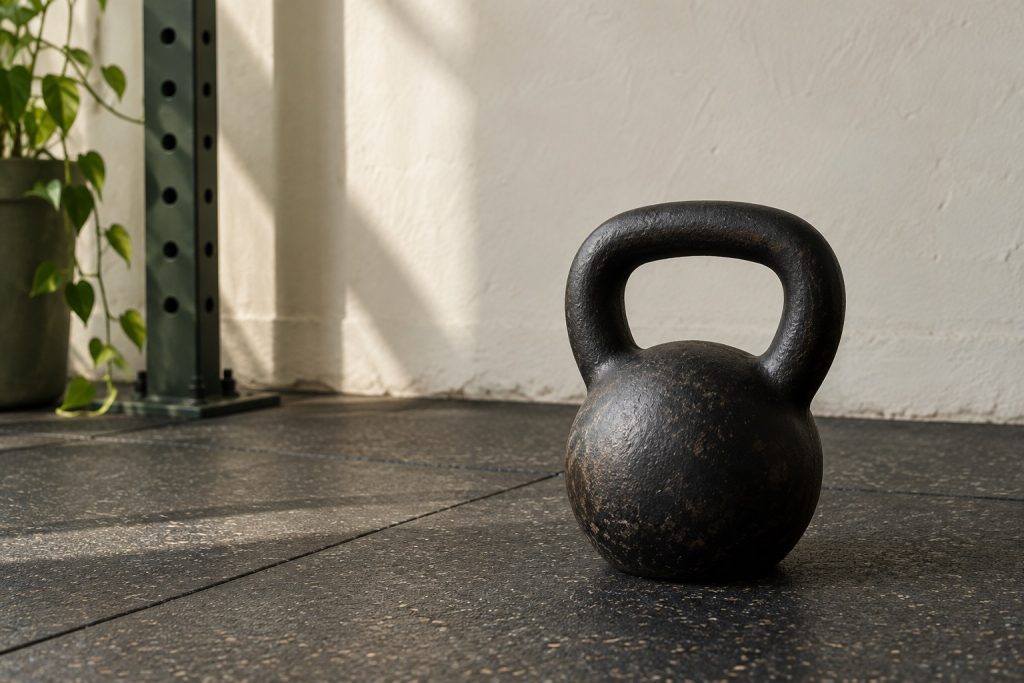
Set up the whole repetition
- Clear a stable standing area and decide where you will put the weight down. Check the implement before lifting it; use the manufacturer’s intended holding method.
- Bring one manageable weight close to your chest with both hands. The exact hand placement depends on the handle and shape. If unsure, ask for a demonstration before attempting repetitions.
- With feet comfortably apart and supported, bend your hips and knees together. Keep the load close, let the knees follow the direction of the feet and lower without dropping into the bottom position.
- Stand again with control, keeping the weight secure. Finish the set before the hold becomes unreliable, then put the implement down in the planned place. Practice this finish as part of the setup.
Choose a first practice load
There is no universal beginner weight. Being able to carry a weight at your side does not establish that you can hold it in front of your chest while squatting. A very light implement or an unloaded squat may be a more useful first rehearsal than the smallest weight on a particular rack.
Try the setup and a few controlled practice repetitions before committing to your planned work. Keep breathing rather than deliberately holding your breath for a prolonged effort. If positioning or returning the weight is difficult, choose less load or ask for help. A completed repetition is not enough if you cannot finish the set securely.
Choose and describe your depth
Use a comfortable range you can control without pain or losing your footing. Body proportions, stance and equipment can change the appearance of a squat; matching a photograph is not an assessment. Do not force greater depth to satisfy a generic rule. Stop if the exercise causes pain and seek appropriate advice if it persists or you are unsure about suitability.
For comparisons, describe the range you actually used. “Same comfortable depth as last time” is useful only if you can reproduce it. If later repetitions become much shallower, note that change rather than treating a higher repetition count as an unchanged task. More depth and more weight at once also change two features.
Troubleshoot the task, not a photograph
| What you notice | A practical response |
|---|---|
| You are unsure how to hold or return this implement | Pause before the set; get a demonstration for this equipment instead of inventing a grip. |
| The weight moves away from the chest or slips | End the set under control. Reassess the hold and load before another attempt. |
| You lose stable foot contact while trying to go lower | Reduce the demand and review stance and range with an instructor; do not improvise a heel support as a universal fix. |
| You can squat comfortably without a weight but not with it | Treat the loaded version as a new task. Rehearse with less load rather than forcing the previous range. |
Record one weight and the work completed
Write the implement, its single stated weight, completed repetitions in each set, range, rest and the reason you stopped. Both hands holding one 8 kg dumbbell still means one 8 kg external load, not 16 kg. This is equipment accounting; it does not include body weight or measure total force.
| Example record | What it tells you |
|---|---|
| One 8 kg dumbbell; 8 then 6 repetitions | 14 completed repetitions. Record the second set as 6, even if 8 were planned. |
| One 8 kg kettlebell; 6 then 6 repetitions on another day | 12 repetitions with a different implement. The same stated mass does not make the hold and setup identical. |
| Same dumbbell; more repetitions but a shallower range | The task changed. Keep that note beside the count before judging progression. |
These invented records are not recommended weights, set counts or targets. Compare sessions with sufficiently similar equipment, range and execution. Keep the two implements as distinct log entries; do not use a guessed dumbbell-to-kettlebell conversion or an estimated maximum to choose the next practice load.
When the hold becomes the limit
Your hands or arms may end the set before your legs feel maximally challenged. That is information about this version, not a diagnosis of weakness. Do not continue with a slipping load to prove the legs could do more. A lighter repeat, another suitable squat setup or instruction may fit the purpose better than a heavier goblet squat.
Use your plan’s progression rule. Record whether the next change concerns load, repetitions or range. If the smallest available increase disrupts control, repeating the current setup is a reasonable option. No single exercise has to remain the main squat variation forever.
Questions for an instructor
- How do I pick up, hold and return this particular dumbbell or kettlebell?
- Which stance and range can I repeat with control, and what should make me end a set?
- If the hold limits the exercise, which alternative serves my current plan?
Related resources
About this article: an introductory editorial draft. Not yet independently reviewed by a fitness professional.