Elliptical Stride Length: Will the Pedal Motion Fit You?
Elliptical stride length describes the reach of the pedal movement. It is different from the machine’s overall length and from how quickly you step. Use it to narrow a comparison, then check how the actual movement feels.
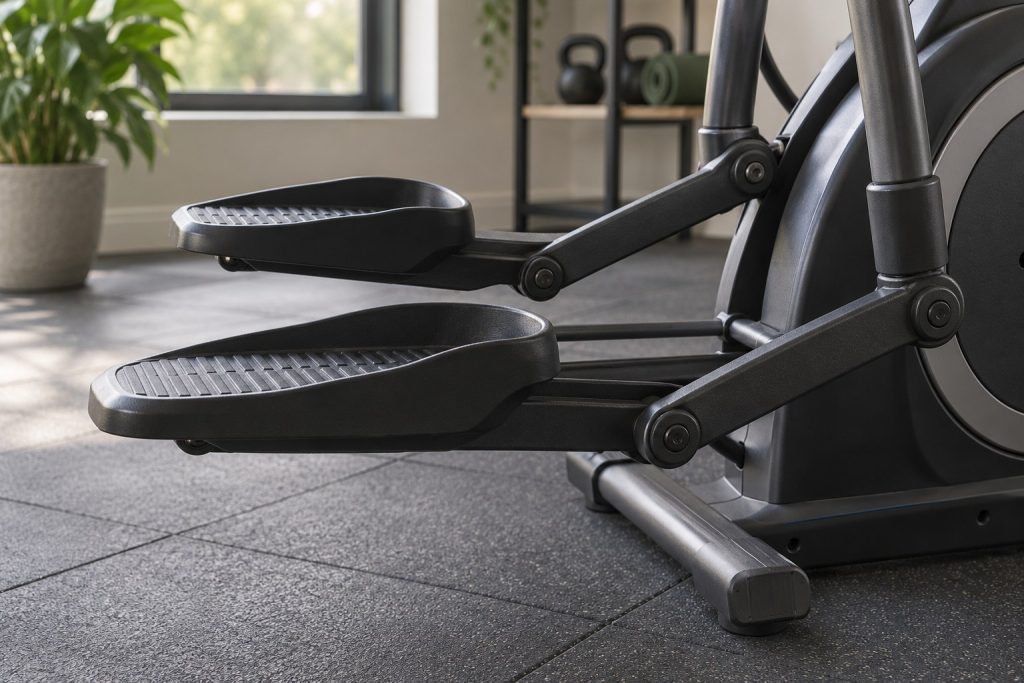
Read the model’s specification
Schwinn’s comparison lists models with 18-inch and 20-inch strides. These are examples of different equipment specifications, not a prescription based on your height. Check whether the model has a fixed stride or an adjustable range.
Do not confuse stride with footprint
A compact frame does not automatically mean a short stride. Record the operating dimensions and the clearance required by the manual separately. Also check ceiling clearance with a user standing on the moving pedals.
Try the whole movement
At an easy effort, check whether you can move comfortably without reaching awkwardly for the handles or feeling forced into an unsuitable step. Pedal spacing and handle placement also matter; one length number cannot describe the entire fit.
Compare like for like
Test the settings you actually expect to use, including permitted incline adjustments. If several people share the machine, each should try it. A longer stride is not automatically a better workout, and a height chart cannot guarantee comfort.
Sources
Related reading
What Does SPM Mean on an Elliptical?
Treadmill Belt Size: What the Dimensions Actually Mean
Four measurements that answer different questions
Separate movement fit from room fit. A machine can fit the floor area yet feel awkward to use, or feel comfortable in a showroom but need more space than your room provides. Use the exact model and manual version for every comparison.
| Measurement | What still needs checking |
|---|---|
| Stride length or adjustable range | How the full pedal path feels to each user. The number alone does not describe pedal spacing, handle reach or a suitable body-height range. |
| Machine length and width | Whether the figures describe storage, the stationary frame or the operating envelope. Ask about moving pedals and handles, access and the manual’s required free space. |
| Pedal height and overhead requirement | The model’s highest operating position and its ceiling instructions, including permitted incline. Overall machine height is not the same as a user’s head height in motion. |
| Pedal and handle arrangement | Room for your shoes, the distance between your feet and comfortable reach. Do not infer these from stride length. |
Ascend’s L-200 specifications list stride, footprint and pedal heights separately. Use the same distinctions for your model, not its numbers. Manufacturer measurement example.
A practical trial checklist
Ask staff to demonstrate starting, stopping, getting on and getting off before trying an unfamiliar machine. Do not use the trial to force a movement that feels wrong.
- Identify the model, fixed or adjustable stride, and any permitted incline settings. Ask which adjustments must be made while stopped.
- Try a comfortable, controllable effort in your usual training shoes. Notice whether the pedal path and handle reach feel manageable without forcing a longer step.
- Record the exact settings, handle choice and any discomfort or awkward reach. Stop if the movement hurts or feels uncontrolled; ask for help rather than chasing a specification.
- Have every intended user try the machine separately. A good result for one person does not confirm it for another.
- Before installation, check the intended spot against the manual, including overhead obstructions and room to get on and off. Measure the room with the machine stopped; never reach near moving parts to take measurements.
Worked decision: the same stride, a different result
Illustrative example: Maya and Alex are comparing two models that both list a 20-inch stride. Maya finds one handle arrangement easier to reach; Alex is comfortable only on the other model. Neither observation changes the listed stride length. Their shared-machine decision remains unresolved: they need a model and permitted setup that both can use comfortably, or another arrangement.
They also discover that the seller’s length measurement does not say whether it includes moving parts. They mark room fit “not confirmed” and request the operating dimensions and clearance instructions. The next step is to resolve that missing information, not to treat a familiar stride number as permission to install.
Keep three conclusions separate: movement tried by each user, space confirmed from the manual, and outstanding questions. A trial is an observation on that day, not a medical assessment or a guarantee of long-term comfort. Use the linked cadence guide to record the effort and settings without turning the display into a fit score.
About this article: an introductory editorial draft. Not yet independently reviewed by a fitness professional.