Chives vs Scallions: Which Part Does the Recipe Need?
Chives are a fine-leaved herb; scallions have thicker green tops and a white base. Both can add onion flavor, but a bunch of one is not a direct quantity replacement for a bunch of the other.
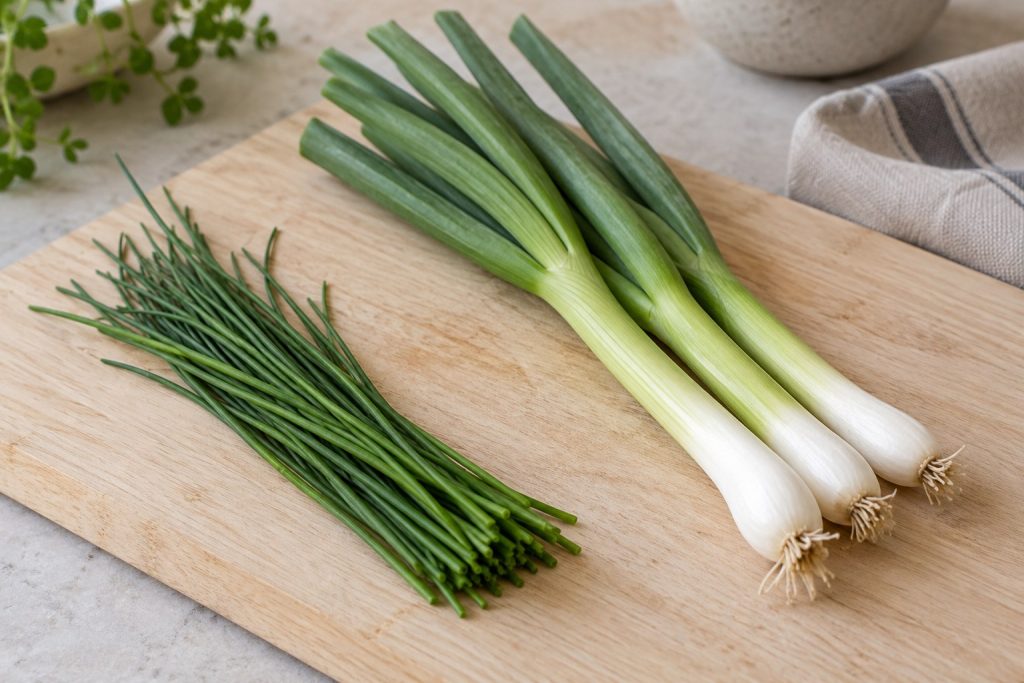
Identify the part you will use
Chive leaves are thin and tubular, commonly snipped over finished dishes. A scallion recipe may use the white base, the green tops, or both. Read that instruction before deciding whether the ingredients can perform the same job.
Substitute most cautiously in a garnish
Finely sliced scallion greens can supply an onion-like garnish when chives are unavailable, with a different texture and flavor intensity. Start with a modest amount in a ready-to-eat sample. Matching the color does not guarantee the same result.
Compare the prepared amount
Measure chopped leaves against chopped leaves, rather than counting stalks or bunches. Scallions provide much more material per stem. If the dish relies on cooked pieces of the white base, chives will not replace that bulk.
Let the recipe settle the choice
For a delicate chive sauce, buy chives when possible. For a stir-fry that names scallion whites and greens separately, keep those roles distinct. Neither ingredient is automatically better; choose according to the texture and onion flavor the dish needs.
Sources
Bonnie Plants; Melissa’s Produce.
Related reading
About this article: an introductory editorial draft. Not yet independently reviewed by a fitness professional.