How to Check Bicycle Helmet Fit Before a Ride
A bicycle helmet should sit level and snug, with its straps adjusted to keep it in place. The right size and shape matter before fine adjustment; a loose helmet is not fixed by simply tightening the chin strap.
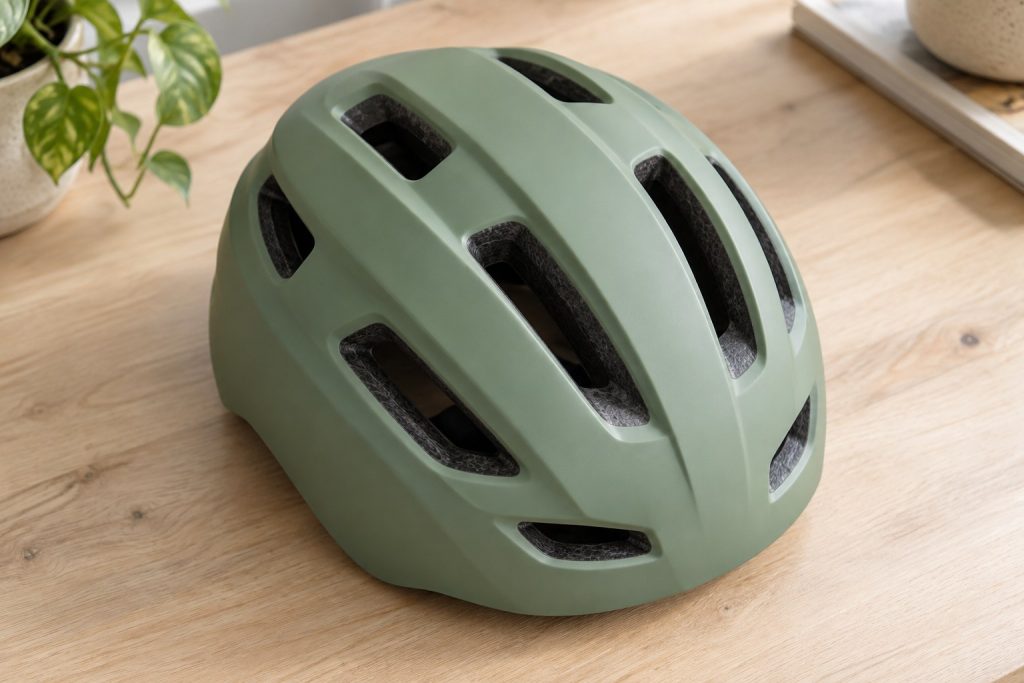
Start with size and position
Use the maker’s sizing guide and try the helmet on. NHTSA recommends a level position, low on the forehead, about two finger widths above the eyebrows. Avoid tipping it back to expose the forehead. A rear adjustment dial should feel secure without painful pressure.
Check the straps at your ears
Adjust each side so the straps form a V under and slightly in front of the ear. Keep straps flat and use the manufacturer’s routing. The cover image is an illustration of a helmet, not a guide to correct strap placement.
Fasten and test the chin strap
Buckle the strap and remove excess slack while leaving room for about two fingers underneath. Open your mouth widely: you should feel the helmet pull down. Gently test forward and backward movement; if it shifts excessively, revisit the fit instructions.
Know when to stop adjusting
If the helmet cannot sit securely and comfortably, try another size or shape. Check the shell, padding and fastening system before riding. Follow the manufacturer’s replacement guidance after an impact or damage; appearance alone cannot establish that a helmet remains protective.
Sources
Related reading
Bike Tire Pressure: What to Check Before Pumping
Flat vs Clipless Bike Pedals: Shoes, Compatibility, and Stops
Related reading
About this article: an introductory editorial draft. Not yet independently reviewed by a fitness professional.