Flat vs Clipless Bike Pedals: Shoes, Compatibility, and Stops
Flat pedals support the shoe on a platform; clipless pedals connect to a compatible cleat fixed to the shoe. Despite the name, clipless systems do clip in. The better choice depends on your riding, footwear, and confidence with stopping rather than a universal upgrade rule.
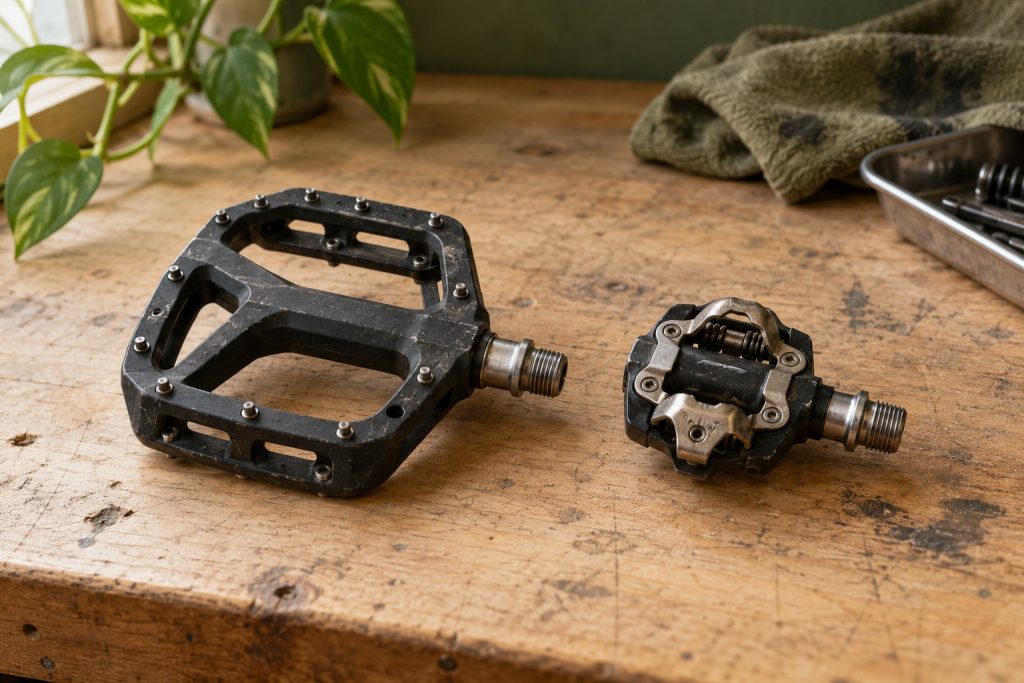
When are flat pedals convenient?
They can be practical for casual trips, frequent stops, or riding in suitable ordinary shoes. Check grip, platform size, and shoe contact rather than assuming every flat pedal feels alike. Keep laces clear of moving parts. A simple setup can be the right choice when easy foot placement matters.
What must match in a clipless system?
The pedal, cleat, and shoe mounting arrangement must be compatible. Similar-looking cleats are not automatically interchangeable. Check the exact system with the maker or a bike shop, including any adapter requirements. The number of mounting holes alone does not settle every compatibility question.
Learn release before riding in traffic
Follow the system’s instructions and practise clipping in and releasing in a controlled, supported setting with help if needed. Do not make a busy road your first trial. Release action and adjustment vary by model. Ask a qualified shop to set up an unfamiliar system rather than guessing at spring settings.
Consider the whole trip
Think about walking at your destination, shared-bike use, and how often you stop. Some pedals offer different functions on opposite sides, but their details still matter. Neither style guarantees fitness gains. Choose the setup you can use confidently and have worn or damaged components checked.
Sources
REI.
Related reading
Cycling Cadence vs. Speed: What the Numbers Mean
Stationary Bike Seat Height: A Practical Setup Check
Related reading
Bike Tire Pressure: What to Check Before Pumping
Related reading
Two-Bolt vs Three-Bolt Cycling Cleats: Check Both Connections
About this article: an introductory editorial draft. Not yet independently reviewed by a fitness professional.