Bike Speed Sensor vs Cadence Sensor: Which Data Is Missing?
A bicycle speed sensor tracks wheel movement for speed and distance; a cadence sensor tracks pedaling rate. One does not automatically provide the other measurement. Choose according to the missing data field and the receiving device’s compatibility.
Look at where the sensor belongs
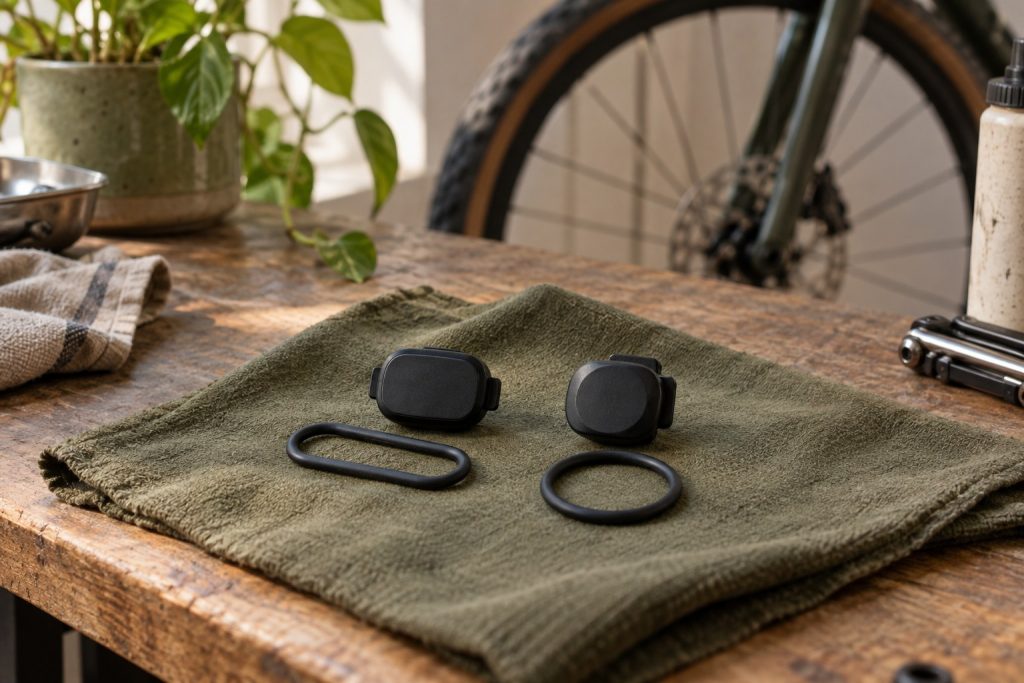
Garmin’s Speed Sensor 2 mounts on a wheel hub, while its Cadence Sensor 2 mounts on a crank arm. Other designs may use different fittings. Follow the specific installation instructions and confirm clearance rather than copying a photograph of another model.
Keep pedal rate separate from travel speed
Cadence is measured in crank revolutions per minute. It can change independently of speed when gearing or riding conditions change. A cadence value alone does not tell you how far the bike has traveled or how much power you produced.
Check what GPS already supplies
The cited Garmin Edge manual explains that GPS supplies speed and distance when suitable sensors are not paired. That does not make GPS a crank-rotation sensor. Decide whether you need cadence, wheel-based distance or simply a different screen layout.
Verify the entire connection
Check the sensor protocol, compatible receiver, pairing instructions and any wheel-size calibration requirements. A compatible radio label alone does not guarantee that every app displays every field. After installation, verify the expected reading on a short ordinary ride.
Sources
Garmin — Bike Sensors; Garmin — Edge Data Fields.
Related reading
Cycling Cadence vs. Speed: What the Numbers Mean
Connected GPS vs Built-In GPS: Does Your Watch Need a Phone?
About this article: an introductory editorial draft. Not yet independently reviewed by a fitness professional.