Basmati vs Jasmine Rice: Choose the Texture You Want
Basmati and jasmine are aromatic rice types with different eating textures. Basmati is commonly chosen for long, separate grains; jasmine often gives a softer, more clinging result. Neither name alone tells you the nutritional value of the complete meal.
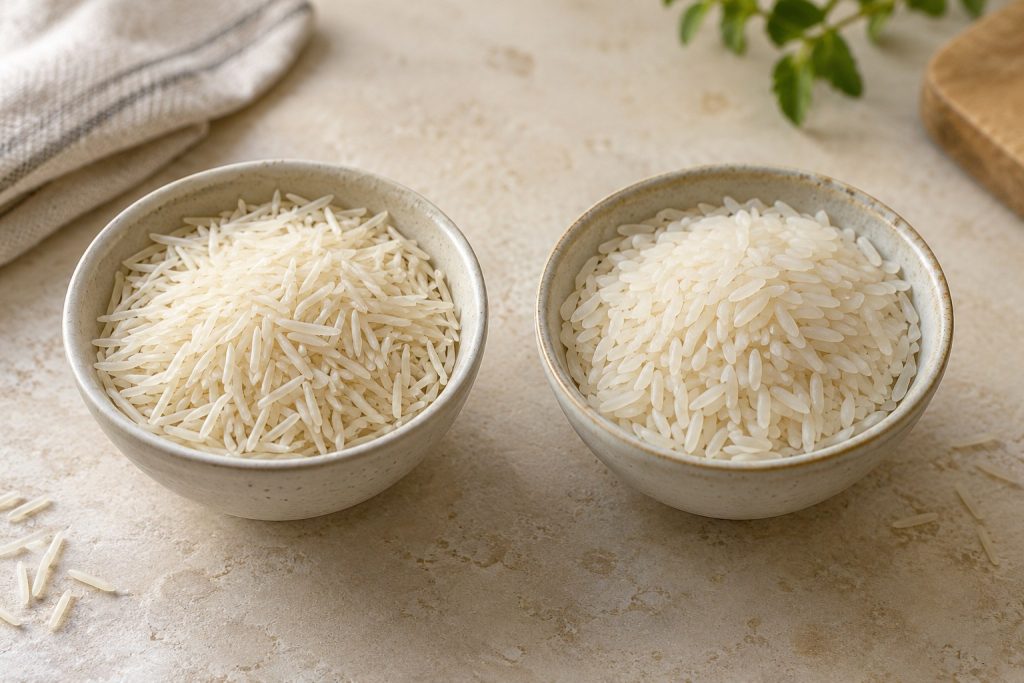
Start with the dish
Tilda describes its basmati as light and separate and its jasmine as having a sticky texture and floral notes. Those are useful culinary clues, not instructions that each rice must always be used in a particular cuisine. Choose the texture that works with your meal.
Follow the specific package method
Use the rinsing, water and cooking directions for your product and appliance. Do not assume identical ratios across rice types or automatically apply dry-rice directions to ready-cooked pouches. Start with the maker’s method before adjusting to your preference.
Keep the comparison fair
Compare plain white rice with plain white rice, or equivalent brown versions. Dry and cooked weights are not interchangeable because cooking adds water. Added oil, sauces and portion size can matter more to the finished meal than choosing between these names.
Record what worked
Note the product, preparation and texture you liked so you can repeat it. For food logging, choose an entry matching the type and cooked state. Aroma is a sensory feature, not evidence that a rice is automatically better for weight management or blood sugar.
Sources
Related reading
Brown Rice vs. White Rice: More Than a Color Difference
Should You Weigh Food Raw or Cooked? Match the Food to the Entry
Related reading
About this article: an introductory editorial draft. Not yet independently reviewed by a fitness professional.