Backpack Sternum Strap vs Hipbelt: Two Buckles, Different Jobs
A sternum strap connects the shoulder straps across your chest; a hipbelt wraps around your hips. On a hiking pack designed to transfer load, the hipbelt helps carry weight while the sternum strap helps position the shoulder harness.
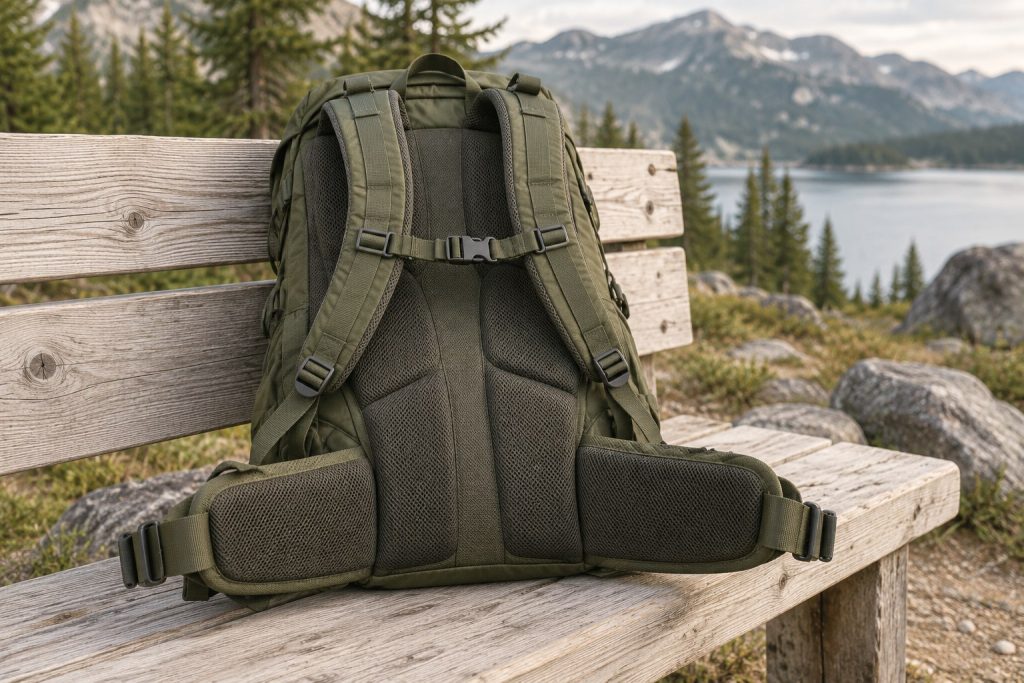
Find each strap before adjusting
The small cross-chest buckle is not a second waist belt. Osprey distinguishes shoulder-harness stabilization from the hipbelt’s role in load transfer. A thin webbing belt on a small daypack may not provide the support of a structured padded hipbelt.
Start with a realistic load
Osprey recommends fitting a pack with weight inside and adjusting the hipbelt before the harness and sternum strap. Use the instructions for your model; running vests and other specialized packs can follow a different fitting sequence.
Keep breathing comfortable
The chest strap should not restrict breathing. Tightening it cannot correct every mismatch in torso length or shoulder-strap shape. Make small adjustments and walk briefly to assess comfort rather than pulling every strap as tight as possible.
Check the fit again after changes
Reassess the harness when changing layers or the load. If the pack still feels wrong, review its size and adjustment range. Adding more tension is not a substitute for a pack that fits your body.
Sources
Osprey — Backpack fitting sequence; Osprey — Sizing and fit.
Related reading
About this article: an introductory editorial draft. Not yet independently reviewed by a fitness professional.