Active Dry vs Instant Yeast: Follow the Dough, Not Just the Clock
Active dry and instant yeast both raise yeast dough, but their speed and recommended handling can differ. Follow the specific product and recipe instructions. A successful substitution may change the waiting time even when the quantity stays the same.
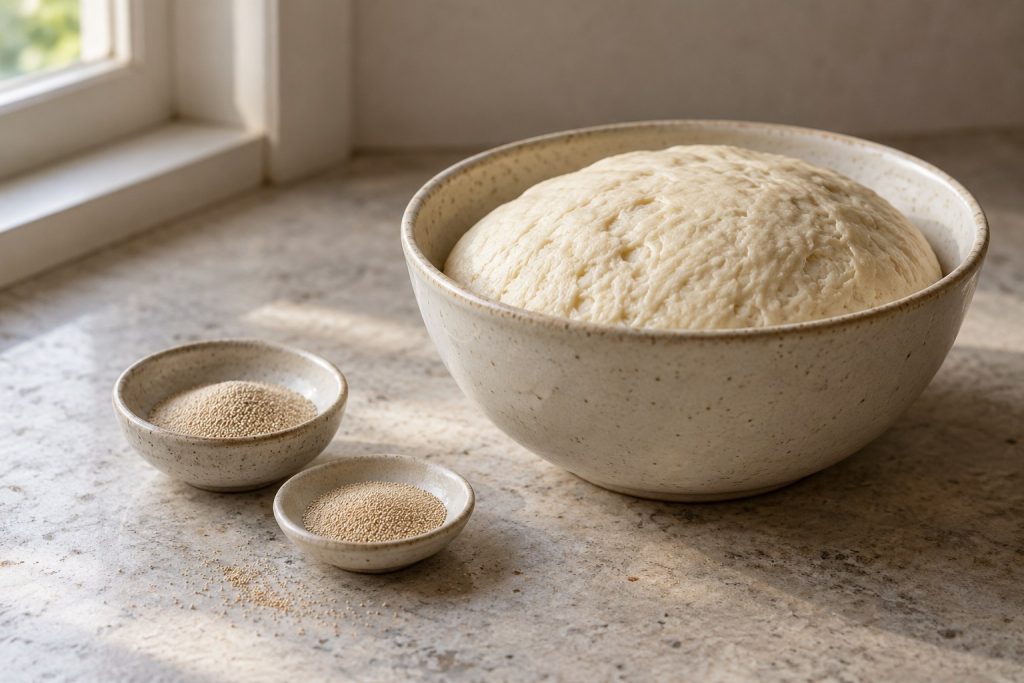
Read the actual yeast type
Red Star describes instant yeast as faster acting than its active dry yeast. Specialized products and bread-machine cycles may have additional requirements. Nutritional yeast and baking powder are different ingredients and are not replacements for living baker’s yeast.
Check whether rehydration is required
Do not assume every active dry yeast must be dissolved first. Red Star allows either rehydration or direct mixing for its products in traditional methods; other package instructions may differ. Follow the stated liquid temperature rather than guessing that hotter water works faster.
Use the maker’s conversion
Red Star permits equal-quantity swaps between the relevant active dry and instant products in traditional dough methods, while noting different rise times. Check the exact product instead of extending that rule to every specialty yeast. Account for any liquid used in rehydration within the recipe total.
Judge the dough and store yeast properly
Use the recipe’s visual or volume cue along with the clock, since dough conditions affect timing. Keep yeast according to the package instructions and check its date. If the dough behaves unexpectedly, review temperature, product and storage before simply adding more yeast.
Sources
Related reading
Nutritional Yeast vs Baker’s Yeast: Flavor or Rising Dough?
Self-Rising vs All-Purpose Flour: What Is Already in the Bag?
About this article: an introductory editorial draft. Not yet independently reviewed by a fitness professional.