Is a Tomatillo Just a Green Tomato? Look for the Husk
A tomatillo is not simply an unripe tomato. It is a related fruit enclosed in a papery husk, commonly used for tart sauces and salsas. Similar green color does not make the two ingredients identical.
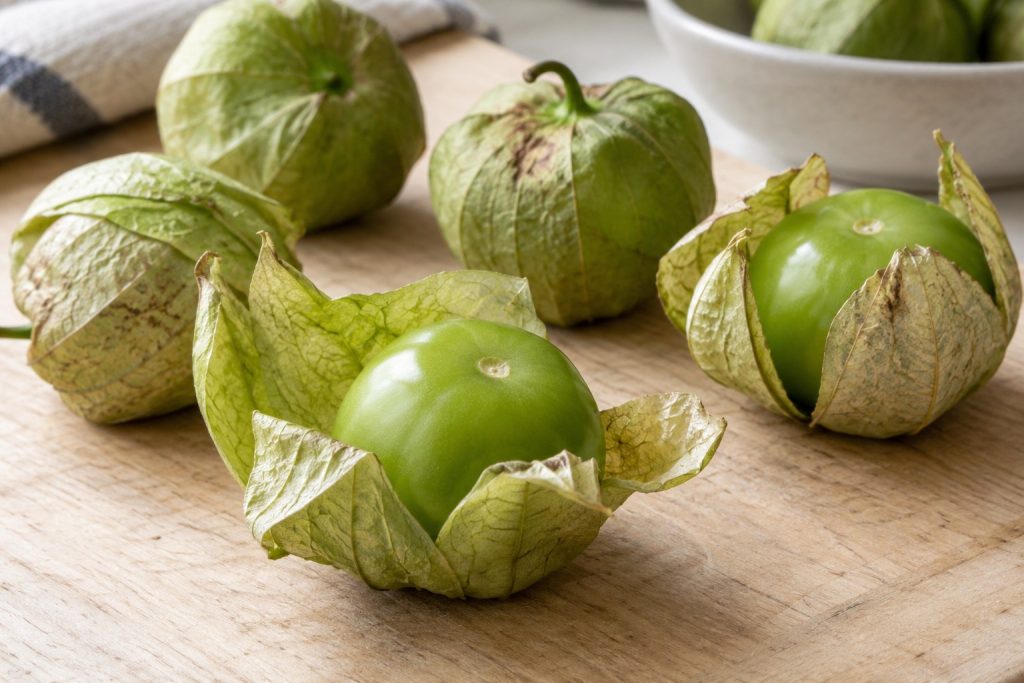
Recognize the husk
University of Minnesota Extension describes firm fruit inside a leafy husk that becomes papery. Tomatillos can be green, yellow or purple depending on variety. The husk and label are more useful than green color alone.
Remove the covering and sticky film
Take off the husk before preparation and wash away the sticky coating on the fruit. Do not blend the papery covering into a sauce. Prepare the fruit according to the recipe after cleaning it.
Do not wait for tomato-like softness
Tomatillos for familiar tart uses are commonly picked firm while filling their husks. Waiting for them to become soft like a ripe tomato can change the flavor you wanted. Judge them as tomatillos rather than by tomato habits.
Use a recipe written for the ingredient
A green tomato substitution changes the ingredient, not only its name. For a fresh dish, use a recipe designed for what you have. For home canning, follow a tested recipe and its permitted substitutions rather than improvising from color.
Sources
University of Minnesota Extension; National Center for Home Food Preservation.
Related reading
Passata vs Chopped Tomatoes: Texture, Labels, and Substitutions
About this article: an introductory editorial draft. Not yet independently reviewed by a fitness professional.