Passata vs Chopped Tomatoes: Texture, Labels, and Substitutions
Passata is generally smooth, strained tomato, while chopped tomatoes retain pieces in their juice. The most useful difference in everyday cooking is texture. Neither name alone tells you how much salt is present or whether the product is already a seasoned pasta sauce.
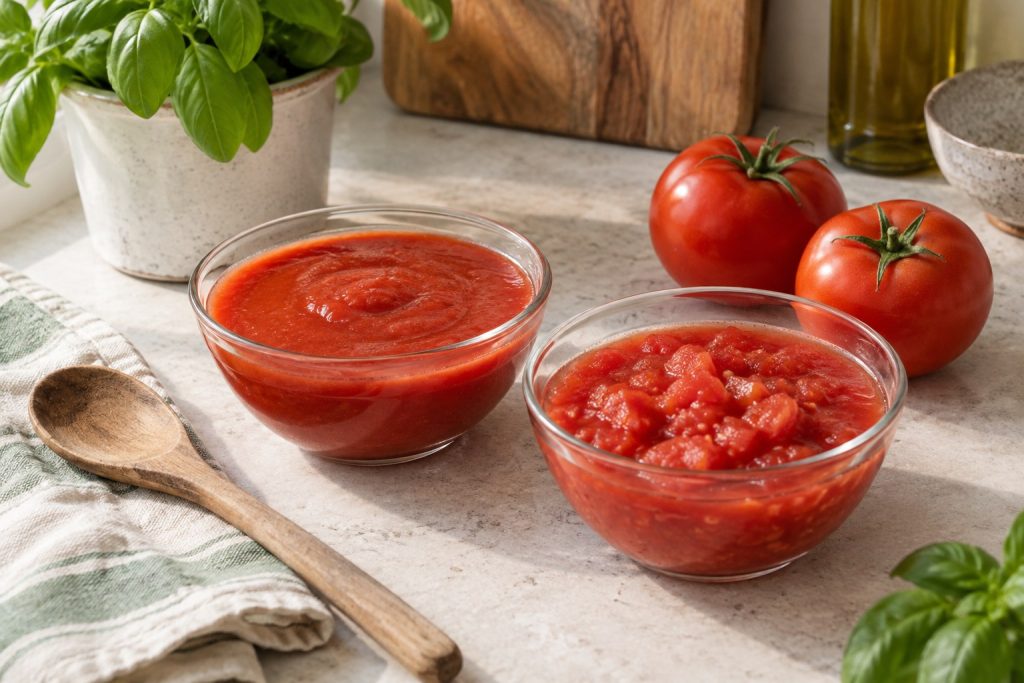
When is passata convenient?
Use it when you want a smooth tomato base without blending chunks, such as a smooth sauce or soup. Read the label because thickness and ingredients vary. A plain passata gives you control over seasoning, whereas a prepared sauce may already contain oil, herbs, or other ingredients. Match the product to the recipe’s intended starting point.
When do chopped tomatoes work well?
They are useful when visible tomato pieces suit a stew, bean dish, or chunky sauce. Products vary in piece size and liquid content. Consider whether the recipe expects the whole contents of the can or a drained ingredient. Draining changes both the amount of tomato liquid and the way the dish cooks.
Can you substitute one for the other?
Often, but expect to adjust texture and liquid. Blending chopped tomatoes makes them smoother, while a passata cannot recreate intact chunks. Check the recipe rather than assuming identical cooking time. Concentrated tomato paste is a different product and is not a direct volume-for-volume substitute. Terms such as tomato purée also vary between markets, so inspect the package.
How do you compare nutrition and avoid waste?
Compare sodium and other listed nutrients using the same weight, then account for the amount in the complete dish. Do not infer a major health advantage from smooth versus chunky texture alone. After opening, follow the package’s refrigeration and use instructions. Choose a convenient pack size and label leftovers so an opened container does not disappear at the back of the fridge.
Sources
Mutti; U.S. Food and Drug Administration.
Related reading
Canned vs. Frozen Vegetables: A Practical Shopping Guide
Canned vs. Dried Beans: Compare Convenience, Sodium, and Cost
Related reading
Tomato Paste vs Tomato Purée: Check the Concentration
Related reading
Green vs Red Pesto: Look Beyond the Color of the Jar
Related reading
Can Ketchup Replace Canned Tomato Sauce?
Related reading
Cherry vs Grape Tomatoes: Round and Juicy or Oblong and Meaty?
Related reading
About this article: an introductory editorial draft. Not yet independently reviewed by a fitness professional.