Fuyu vs Hachiya Persimmons: Firm Slices or Soft Pulp?
Fuyu persimmons can be eaten while firm; Hachiya should be fully ripe and very soft before eating. Treating every orange persimmon like a crunchy apple can lead to an unpleasantly astringent bite.
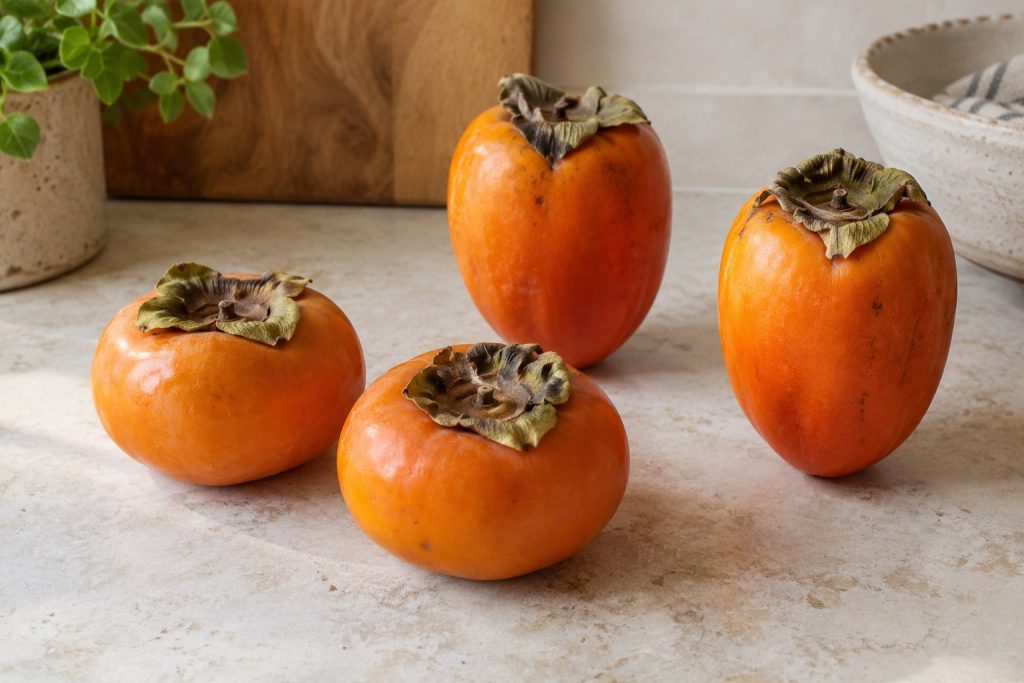
Start with the variety name
Fuyu is commonly squat, while Hachiya is more elongated and pointed. Shape helps, but check the label or ask the seller. Other persimmon varieties exist, so a photograph is not a complete identification system.
Understand the texture difference
Illinois Extension distinguishes the less-astringent Fuyu from Hachiya, whose astringency decreases as it fully ripens. Firm Fuyu pieces and soft Hachiya pulp are therefore different recipe ingredients, even though both are persimmons.
Give unripe fruit time
Let unripe persimmons ripen at room temperature, then refrigerate once ripe. Check the actual fruit rather than promising readiness on a fixed day. Softness appropriate for ripe Hachiya should not be confused with visible spoilage.
Match the recipe’s form
Choose a recipe that names the variety or clearly describes the required texture. Sliced fruit for a salad and pulp for a batter cannot be exchanged only by counting whole fruits. Measure the prepared edible portion the recipe requests.
Sources
University of Illinois Extension; University of California Agriculture and Natural Resources.
Related reading
About this article: an introductory editorial draft. Not yet independently reviewed by a fitness professional.