Green vs Red Pesto: Look Beyond the Color of the Jar
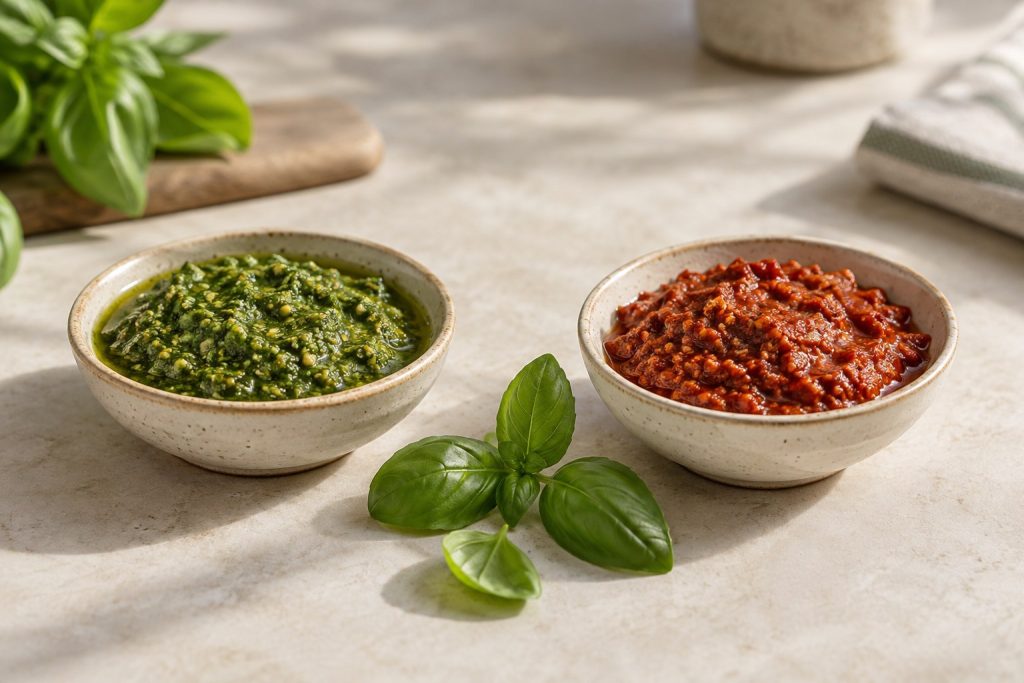
Green pesto commonly emphasizes basil; red pesto commonly emphasizes tomatoes. Neither color defines a single ingredient list. Compare the jar’s actual recipe before assuming the flavor, allergens, or nutrition will match another pesto.
Use product examples carefully
Barilla’s UK Genovese pesto contains basil, oil, cashews, and cheese. Its Rosso contains tomato pulp and concentrate, oil, cheese, cashews, and balsamic vinegar, among other ingredients. These examples illustrate different recipes rather than universal rules for green and red pesto.
Do not guess allergens from color
Both example products contain milk and cashews, and the Rosso ingredient list also identifies egg-derived lysozyme. A tomato-based appearance does not establish that a sauce is dairy-free or vegan. Read the allergen statement on the jar you are buying.
Choose for the dish
Either style can work with pasta or as a sandwich condiment when the flavors suit the dish. Follow the product’s serving directions; Barilla says these pestos are ready to use without heating. Taste before adding extra salt or other strong seasonings.
Compare portions fairly
Check nutrition at the same weight, then consider how much sauce you actually use. Do not infer a lighter product from a redder color. Refrigerate after opening as directed and use the specific label’s storage window, which can differ between products.
Sources
Barilla — UK Genovese pesto; Barilla — UK Rosso pesto.
Related reading
Passata vs Chopped Tomatoes: Texture, Labels, and Substitutions
About this article: an introductory editorial draft. Not yet independently reviewed by a fitness professional.