Dried vs Fresh Mushrooms: Start with the Form the Recipe Needs
Dried mushrooms have lost water, so they are not a weight-for-weight substitute for fresh mushrooms. Use the variety and form requested by the recipe, or follow its substitution guidance. This comparison concerns commercially sold edible mushrooms, not identification of wild mushrooms.
Choose for the dish
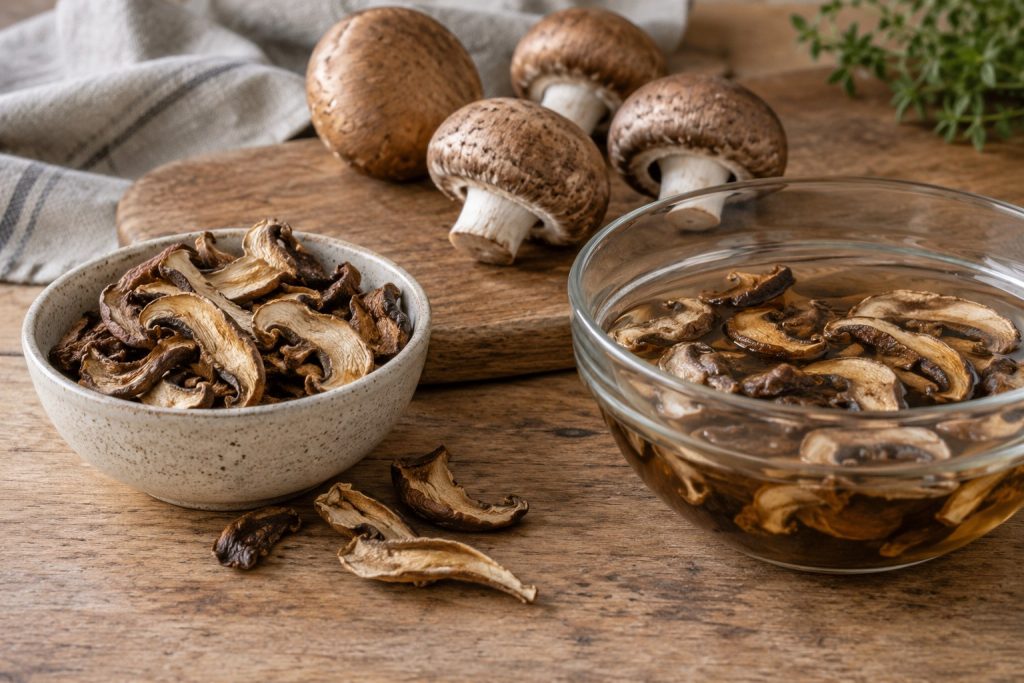
D’Artagnan describes dried porcini as an ingredient to rehydrate for stews, sauces and pasta dishes. Fresh mushrooms and rehydrated dried mushrooms need not give the same texture. A recipe that combines them may be using each for a different purpose.
Read the preparation directions
Follow the package and recipe for soaking liquid, timing and subsequent cooking. D’Artagnan gives hot, not boiling, liquid as its porcini rehydration guidance. Do not extend one supplier’s instructions to every mushroom species or treat soaking alone as a cooking step.
Measure at the stated stage
Check whether a recipe weight means dried mushrooms before soaking or drained mushrooms afterward. Water uptake changes the weight, so switching between those stages can change the amount substantially. Use a supplied conversion rather than inventing a universal fresh-to-dried ratio.
Keep the storage guidance
Store the dry product as its packaging directs and keep preparation instructions if you move it to a jar. Rehydrated mushrooms are no longer a dry pantry ingredient. Follow the recipe or supplier’s refrigerated-storage guidance and prepare the amount you plan to use.
Sources
Related reading
Fresh vs Frozen Spinach: Match the Form to the Recipe
Should You Weigh Food Raw or Cooked? Match the Food to the Entry
Related reading
White Button vs Cremini Mushrooms: Same Species, Different Forms
About this article: an introductory editorial draft. Not yet independently reviewed by a fitness professional.