Dijon vs Yellow Mustard: Taste Before You Swap
Dijon and yellow mustard are different styles of prepared mustard, not identical seasonings in different packages. A substitution can change flavor and color. For sandwiches or dressings, taste the actual product; for a specific recipe, start with its stated type.
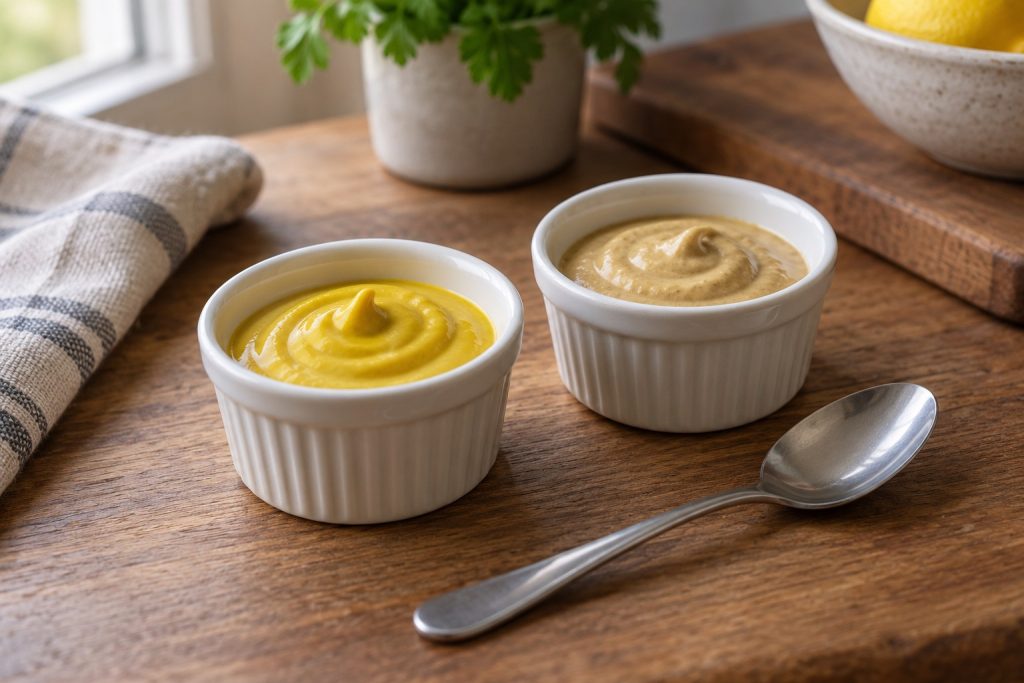
Use the ingredients as evidence
The cited French’s yellow mustard includes turmeric and paprika among its seasonings. The cited Dijon includes Chardonnay wine. These are examples from specific products, not universal ingredient lists for every mustard sold under those names.
Check texture as well as flavor
Smooth mustard and whole-grain mustard are separate texture choices. Dijon does not automatically mean visible whole seeds. If a sauce is meant to be smooth, inspect the jar instead of choosing by a familiar brand or a similar color.
Adjust a substitution gradually
A different mustard can alter a dressing or sandwich even if the spoonful stays the same. Mix a small amount into a separate portion first when possible. Taste before adding more salt or other strong seasonings; do not assume a universal exchange ratio.
Read storage and dietary details
Follow the actual label for storage, ingredients and dietary requirements. French’s recommends refrigeration after opening for best flavor on the cited products. Compare sodium by equivalent portions if needed, and remember that sweetened mustard sauces are another formulation.
Sources
French’s / McCormick; French’s / McCormick.
Related reading
Garlic Powder vs Garlic Salt: Avoid Doubling the Salt
Light vs Dark Soy Sauce: Light Does Not Mean Low Sodium
Related reading
Red vs White Wine Vinegar: Which Fits Your Salad Dressing?
Related reading
Mustard Powder vs Prepared Mustard: What Changes in a Recipe?
About this article: an introductory editorial draft. Not yet independently reviewed by a fitness professional.