Mustard Powder vs Prepared Mustard: What Changes in a Recipe?
Mustard powder is a dry ingredient; prepared mustard is a condiment that already contains liquid and often other seasonings. A spoonful of each does not bring the same concentration, moisture, or flavor to a recipe.
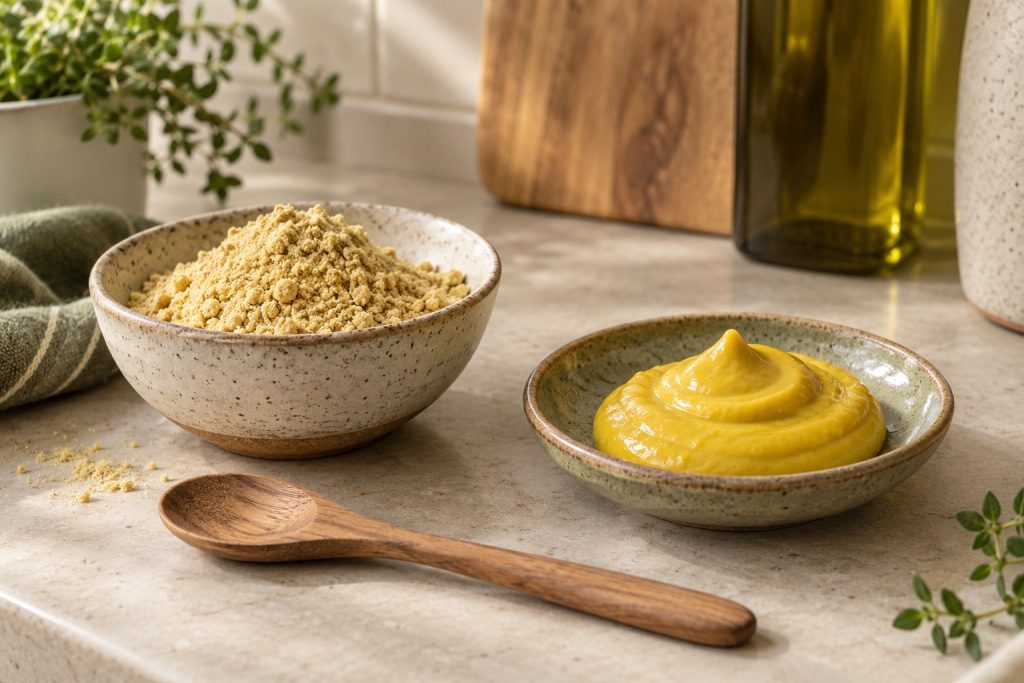
Read what the recipe actually names
McCormick describes ground mustard as finely ground mustard seeds. Dry mustard and ground mustard commonly refer to that powder. A prepared product may contain additional ingredients, so check the label rather than assuming it is simply powder mixed with water.
Look at a real ingredient list
Colman’s English Mustard lists water, mustard flour, sugar, salt, wheat flour, turmeric, citric acid, and a stabilizer. Other prepared mustards use different formulas. That example shows why a swap can change more than mustard flavor.
Match the recipe’s purpose
A dry rub needs a different moisture balance from a dressing. If a recipe offers a tested substitution, follow its liquid and seasoning adjustments. Otherwise, try a small portion of a sauce first rather than changing the entire batch blindly.
Check labels when avoiding ingredients
Do not assume every mustard is free of wheat, added salt, or sugar. Compare the actual products and follow their storage directions after opening. Keep powder and prepared mustard clearly labeled so the distinction remains visible in your pantry.
Sources
McCormick Kitchens — Ground mustard; Colman’s — English mustard ingredients.
Related reading
About this article: an introductory editorial draft. Not yet independently reviewed by a fitness professional.