Fresh vs Low-Moisture Mozzarella: Choose for the Dish
Fresh mozzarella is soft and moist; low-moisture mozzarella is firmer and contains less water. Both can work in cooked dishes, but they behave differently. Choose for the texture and moisture your recipe needs instead of assuming every package labeled mozzarella is interchangeable.
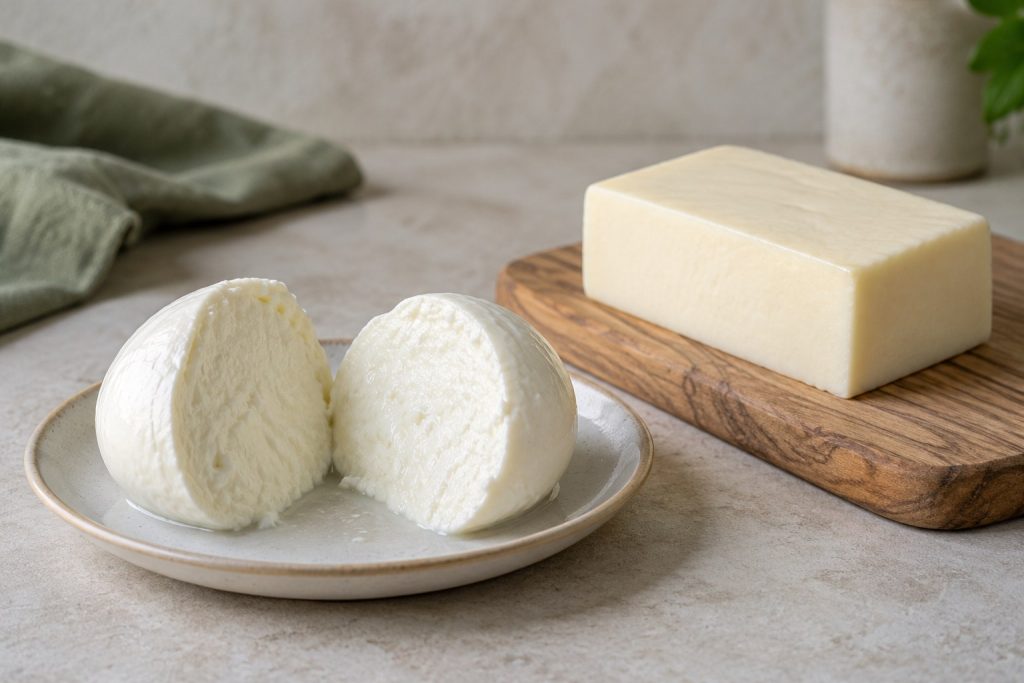
Identify the cheese, not just the shape
BelGioioso describes its fresh mozzarella as soft and delicate and its low-moisture product as semi-soft. Fresh cheese can come in balls or logs, while firmer cheese may be sold as a block or shreds. Read the description rather than relying only on shape.
Match moisture to the recipe
Fresh mozzarella suits salads and can also be used on pizza. Follow the recipe’s draining or blotting instructions when excess moisture matters. Low-moisture mozzarella is a common cooking option, but a product example does not establish a single best cheese for every pizza style.
Compare like portions
Compare nutrition at the same weight and check whole-milk or part-skim wording. Moisture, salt and formulation can differ. A handful of shreds and a whole ball are not equivalent servings, so use the actual amount rather than the package’s appearance.
Follow storage directions after opening
Keep the cheese refrigerated as directed and follow the package’s use-after-opening instructions. Do not assume fresh and low-moisture products share a storage life. Plan the remainder into another meal and avoid treating a recipe substitution as a nutritional upgrade.
Sources
BelGioioso fresh mozzarella; BelGioioso low-moisture mozzarella.
Related reading
Cottage Cheese vs. Greek Yogurt: Compare Your Actual Portion
Serving Size vs Portion Size: How to Read the Numbers
Related reading
About this article: an introductory editorial draft. Not yet independently reviewed by a fitness professional.