Polenta vs Cornmeal: Read the Grind and the Cooking Instructions
Polenta is a dish made from cooked ground corn, and the word also appears on packages of cornmeal intended for it. Cornmeal describes the ground ingredient. The useful comparison is grind, processing and preparation, not assuming the names always mean different grains.
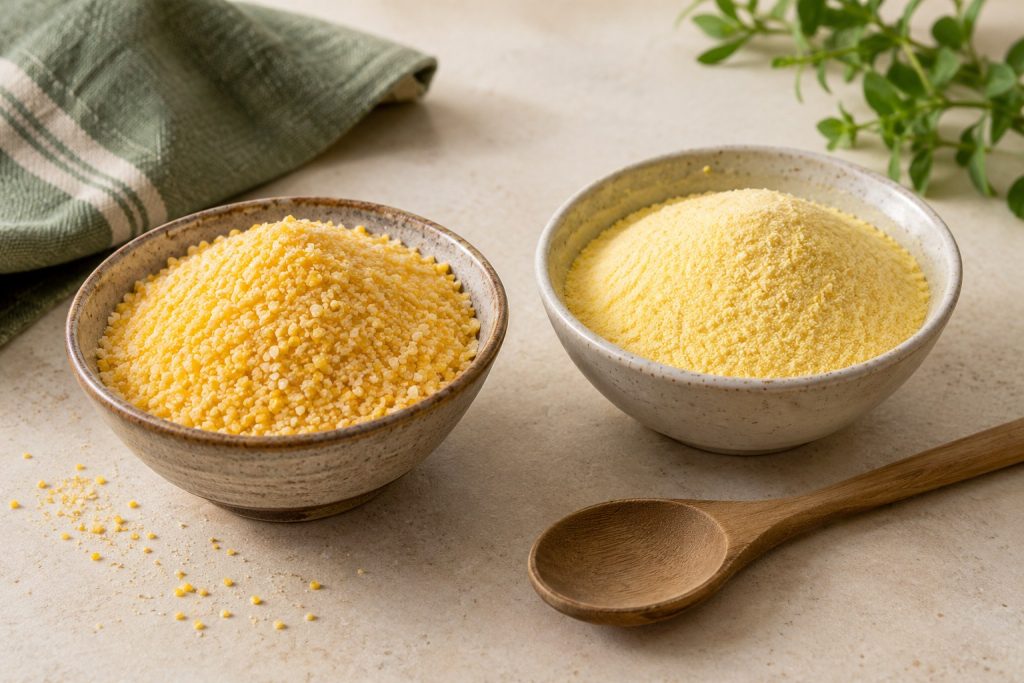
Look beyond the front label
Bob’s Red Mill sells coarsely ground yellow corn for polenta. Other cornmeal products can have a finer grind. Check the actual texture and description; the same broad ingredient name can cover products that behave differently in a pot or cake.
Match the form to the recipe
A recipe written for coarse polenta may not give the same texture with fine cornmeal. Likewise, a delicate bake may not suit a coarse replacement. Start with the specified grind and use a tested substitution when the texture matters.
Distinguish dry from prepared
Instant products and ready-cooked polenta are not the same as a bag of uncooked meal. Follow the product’s liquid and cooking instructions rather than imposing one universal method. Compare dry or prepared quantities consistently when reading nutrition information.
Check the rest of the label
Cornmeal is not automatically whole grain simply because it is yellow or coarse. Check whole-grain wording, ingredients and any gluten-free claim you need. Butter, cheese or sauces added to the finished dish also change what is on the plate.
Sources
Bob’s Red Mill; Bob’s Red Mill.
Related reading
Whole Grains vs. Refined Grains: Read Past the Package Color
Buckwheat Groats vs Flour: Which Form Do You Need?
Related reading
About this article: an introductory editorial draft. Not yet independently reviewed by a fitness professional.