Light vs Dark Soy Sauce: Light Does Not Mean Low Sodium
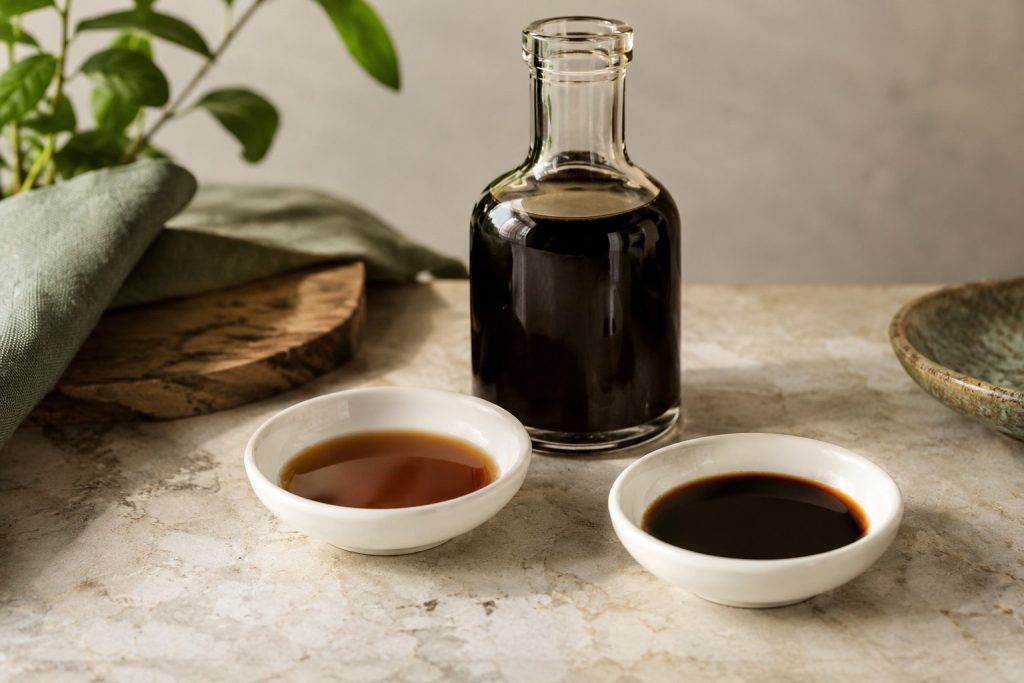
In Chinese-style cooking, light soy sauce is commonly used for seasoning, while dark soy sauce adds stronger color and a different flavor and texture. Light describes a sauce style, not a promise of low sodium. Naming varies across culinary traditions.
Follow the recipe’s style
Lee Kum Kee distinguishes its light and dark sauces by their culinary roles. A recipe may call for both. Do not assume Japanese, Chinese and other sauces with similar translated names behave identically; identify the style the recipe intends.
Read reduced-sodium claims separately
If you want less sodium, look for an explicit reduced-sodium or less-salt product and compare its panel with the regular version. Kikkoman’s less-sodium range is a distinct product category. Darker color alone tells you neither sodium content nor sweetness.
Measure the amount used
Compare equal volumes, then consider how much enters the whole dish and how many portions it makes. Adding more of a reduced-sodium sauce can narrow the intended difference. Taste adjustments should also account for other salty ingredients in the recipe.
Check ingredients and storage
Many soy sauces contain wheat as well as soy, so read allergen and gluten-free information when relevant. Follow the bottle’s storage directions after opening. Sweet soy sauces and flavored sauces are additional products, not automatic substitutes for either light or dark soy sauce.
Sources
Lee Kum Kee; Kikkoman; Kikkoman.
Related reading
How to Read a Nutrition Label for Protein and Serving Size
Tofu vs. Tempeh: A Practical Guide for Everyday Meals
Related reading
Miso Paste vs Instant Miso Soup: Read What Is Already Added
Related reading
Low Sodium vs Reduced Sodium: Reading US Food Labels
Related reading
Fish Sauce vs Oyster Sauce: Similar Savory Notes, Different Jobs
About this article: an introductory editorial draft. Not yet independently reviewed by a fitness professional.