Fish Sauce vs Oyster Sauce: Similar Savory Notes, Different Jobs
Fish sauce is typically a thin fermented-fish seasoning; oyster sauce is typically a thicker sauce made with oyster ingredients and other seasonings. Their savory flavors overlap, but replacing one with the other can change texture, sweetness, and saltiness.
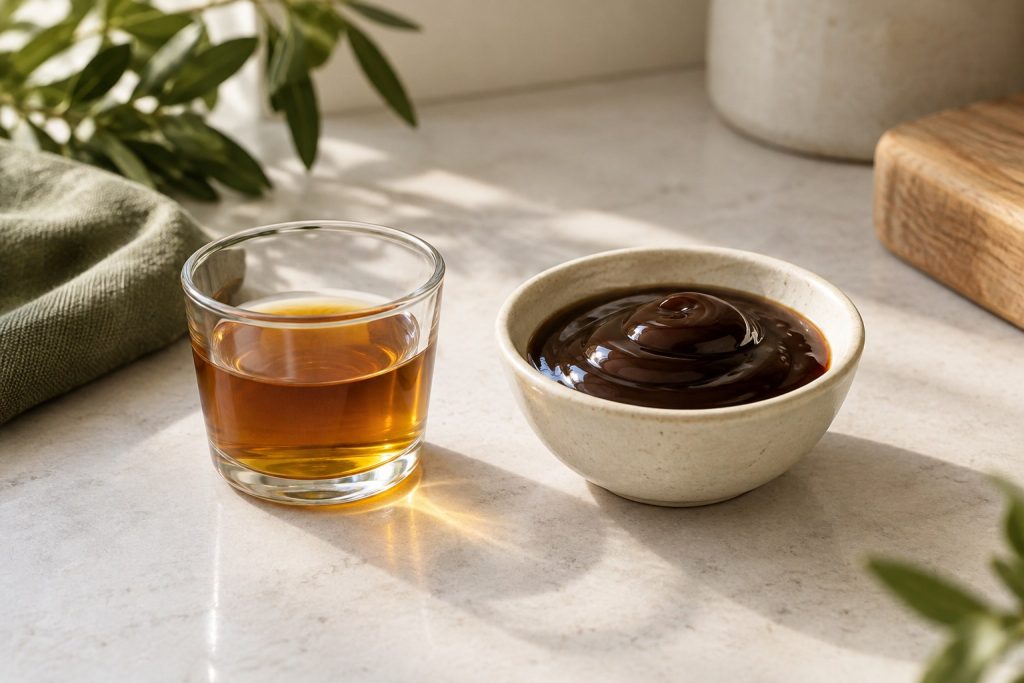
Read a pair of real labels
Red Boat’s fish sauce lists anchovies and sea salt. Lee Kum Kee’s premium oyster sauce includes oyster extractives, sugar, water, salt, starch, wheat flour, and other ingredients. These are examples, not fixed formulas for every bottle in either category.
Consider what the sauce does
A thin seasoning can add flavor without creating the same coating as a thicker sauce. Replacing oyster sauce with fish sauce may therefore change both consistency and taste. A recipe that lists both may be using them for different contributions.
Avoid a universal spoon-for-spoon rule
For a flexible sauce, test a small portion and adjust the rest of the seasonings. For a specific dish, use a tested substitution. Do not compensate with extra sugar or starch automatically without considering the recipe as a whole.
Check dietary requirements separately
Fish and oyster ingredients are distinct allergen concerns, and wheat may also appear in the formula. Neither example is vegetarian. A vegetarian oyster-style sauce is a different product; read its ingredients and storage directions rather than relying on a familiar name.
Sources
Red Boat — Fish sauce ingredients; Lee Kum Kee — Premium oyster sauce.
Related reading
About this article: an introductory editorial draft. Not yet independently reviewed by a fitness professional.