Teaspoon vs Tablespoon: Avoid a Recipe Mix-Up
A teaspoon and a tablespoon are different measures, not interchangeable pieces of cutlery. In the rounded kitchen equivalents listed by NIST, a teaspoon is 5 mL and a tablespoon is 15 mL: 3 teaspoons make a tablespoon.
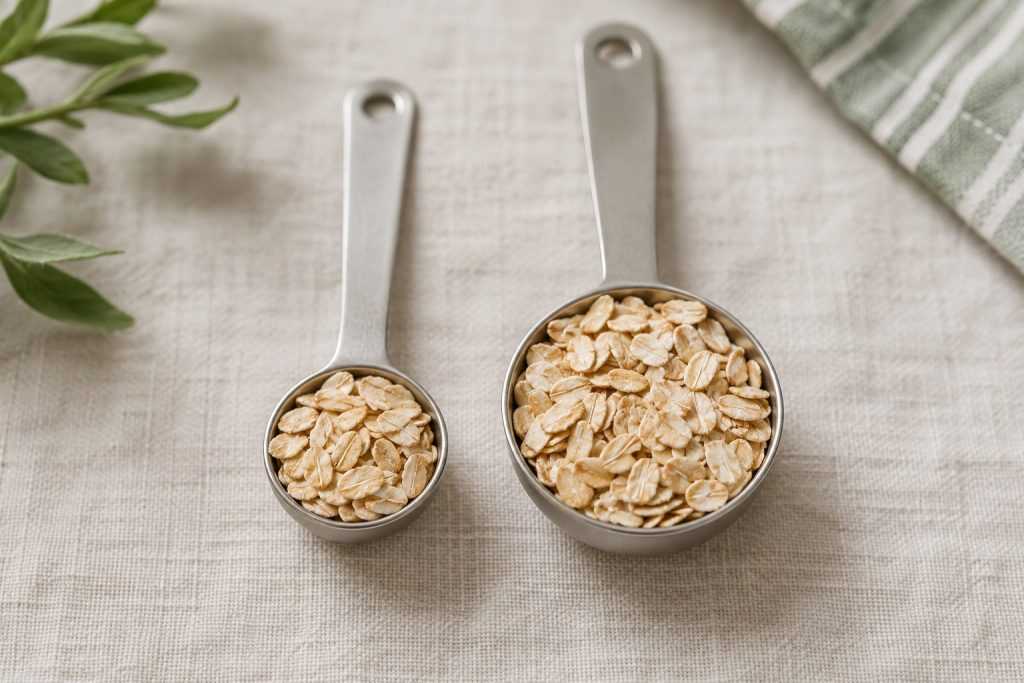
Read the abbreviation carefully
English recipes commonly use tsp for teaspoon and tbsp for tablespoon. The extra letter matters. Write the unit out when copying a recipe, especially for salt or raising agents, where a mistaken spoon changes the result substantially.
Check the recipe’s origin
Spoon conventions are not identical worldwide, so check any metric equivalents supplied by the author. The NIST figures are rounded cooking equivalents, not a claim that every national tablespoon standard is identical. Follow the recipe’s stated system consistently.
Use measuring spoons
An ordinary eating spoon is not a reliable volume measure. For a level dry measure, fill the correct measuring spoon and level the surface unless the recipe specifies otherwise. Heaped and loosely filled measures introduce extra uncertainty.
Keep volume separate from mass
A spoon measures volume, not a universal number of grams. Sugar, oil and flour do not all weigh the same at equal volumes. If the recipe provides a weight for that ingredient, a suitable scale can avoid guessing from spoon size.
Sources
NIST.
Related reading
Dry vs Liquid Measuring Cups: Use the Right Tool
Grams vs Milliliters on a Kitchen Scale
Related reading
Kosher Salt vs Table Salt: Why the Spoonful Changes
Related reading
About this article: an introductory editorial draft. Not yet independently reviewed by a fitness professional.