Whole-Wheat vs Regular Pasta: What Changes in the Bowl?
Whole-wheat pasta uses flour containing the grain’s bran, germ and endosperm. Regular wheat pasta usually uses refined semolina. Whole-wheat versions commonly provide more fiber, but the exact difference depends on the products and serving sizes.
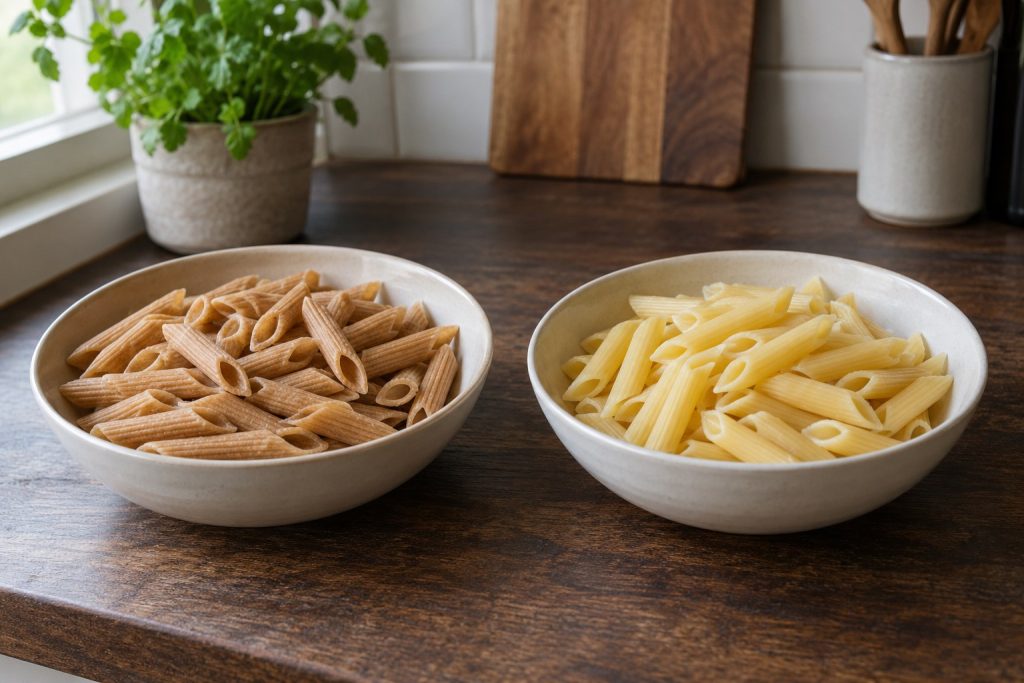
Check the ingredient list
Look for whole wheat or whole-grain durum wheat rather than relying on a brown color or multigrain wording. Barilla’s whole-grain penne, for example, lists whole-grain durum wheat flour. Products with mixed flours need their own label check.
Compare equal dry portions
Use the same dry weight when comparing nutrition panels. Cooked weights change with absorbed water, so unequal cooked portions can hide the difference. Compare fiber alongside protein, sodium and the portion you actually plan to eat; no single label number describes the meal.
Expect a different bite
Whole-wheat pasta often tastes nuttier and feels firmer. Follow that package’s timing and taste for the texture you prefer. A familiar sauce or a gradual change can make trying it easier. Different pasta shapes and brands do not necessarily finish cooking together.
Build the rest of the dish
Either pasta can be part of a meal with vegetables and an appropriate protein source. Sauce, additions and portion size still matter. Whole wheat is still wheat: it is not a gluten-free substitute and is unsuitable when wheat or gluten must be avoided.
Sources
Barilla; Whole Grains Council.
Related reading
Whole Grains vs. Refined Grains: Read Past the Package Color
Fresh vs Dried Pasta: Portions, Cooking, and Storage
Related reading
Rice Noodles vs Wheat Noodles: Check Ingredients and Cooking
Related reading
About this article: an introductory editorial draft. Not yet independently reviewed by a fitness professional.