How to Listen More Safely During Workouts
Hearing risk depends on both sound level and listening time. Lowering workout audio and reducing time around loud sound are more useful than assuming a particular headphone style makes high volume harmless.
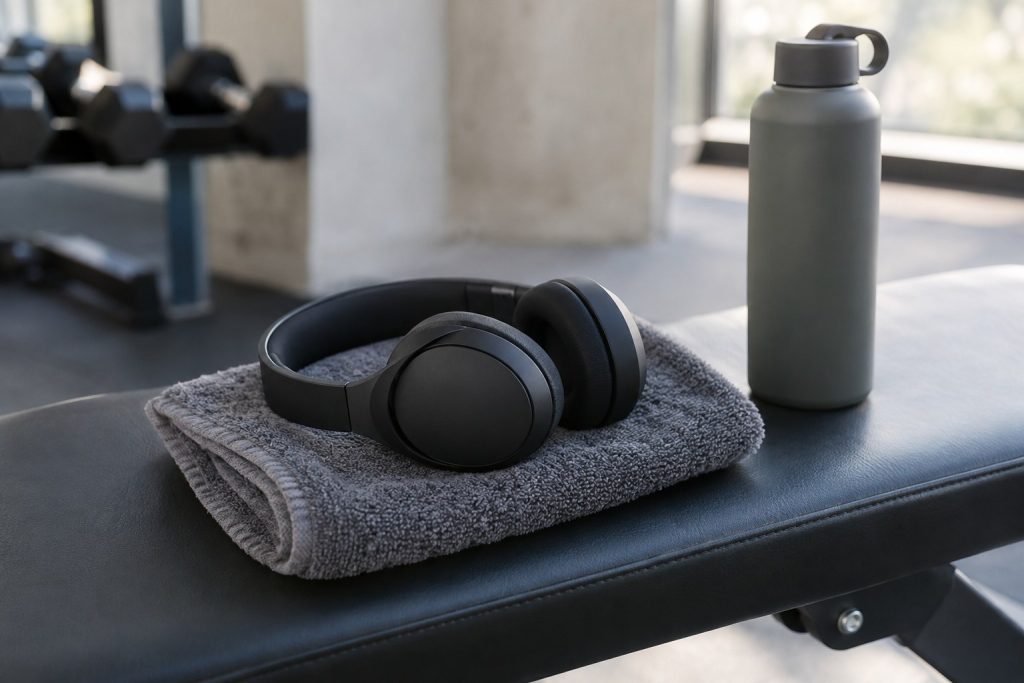
Do not compete with background noise
A loud gym can tempt you to increase volume. WHO recommends keeping personal-device volume below 60% of maximum. Treat that as a practical precaution, not a calibrated guarantee: output varies with the device, recording and headphones. Lower is sensible when sound still feels loud.
Use the features already available
Enable a volume limit or headphone sound-exposure monitoring if your device supports it. Well-fitting noise-cancelling headphones can reduce the urge to turn music up indoors. They are not automatically certified hearing protectors for a loud environment.
Keep awareness of the surroundings
Outdoors, traffic and other people still need your attention. Pause audio or remove headphones where listening to the surroundings is important. Open-ear designs and transparency modes do not guarantee awareness or make unlimited volume safe. Follow the facility’s rules and instructor cues.
Count listening beyond the workout
Your commute, gaming and other noisy activities add to the day’s exposure. Take quiet breaks instead of filling every gap with more audio. Ringing, muffled hearing or difficulty following conversations warrant a hearing assessment; do not use a louder setting to compensate.
Sources
Related reading
What to Pack in a Gym Bag: A Beginner’s Checklist
Reflective Gear vs Lights for Evening Walks
Related reading
Sweat-Resistant Headphones: Can They Go in the Pool?
Related reading
Running Belt vs Phone Armband: Try It With Your Actual Phone
About this article: an introductory editorial draft. Not yet independently reviewed by a fitness professional.