Running Belt vs Phone Armband: Try It With Your Actual Phone
A running belt carries your phone around your waist or hips; an armband carries it on your upper arm. Either can work, but comfort depends on fit, pocket size and what you carry. Try the loaded accessory before committing to a long run.
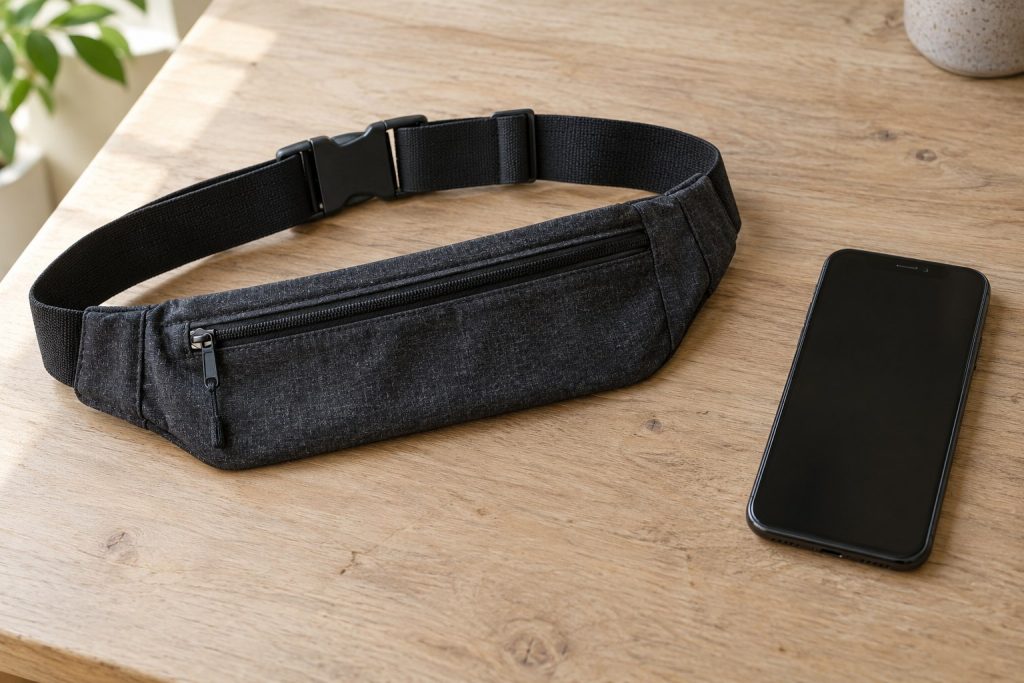
Measure the phone with its case
Use the dimensions of the phone and case together. A screen-size label alone does not establish pocket compatibility. Check the opening as well as the pocket: a phone that fits inside may still be awkward to insert or remove.
Check how the accessory adjusts
Some belts are sized stretch loops, while others use adjustable straps. Armbands also have a limited adjustment range. Follow the specific size guide and test over the clothing you will wear; a size that works over a shirt may fit differently on bare skin.
Test with your real load
Add the keys and other small items you intend to carry, close all pockets, and walk or jog briefly somewhere safe. Check for bouncing, rubbing and pressure. Separate hard keys from the phone where the pocket arrangement allows it.
Look beyond storage capacity
Check washing instructions, access to controls and any stated weather protection. Sweat resistance is not a promise of waterproofing. Stop in a safe place to retrieve or operate your phone rather than struggling with a pocket while moving through traffic.
Sources
Related reading
About this article: an introductory editorial draft. Not yet independently reviewed by a fitness professional.