Dry vs Liquid Measuring Cups: Use the Right Tool
Dry cups and liquid jugs both measure volume, but their shapes suit different tasks. A dry cup can be leveled at its rim; a liquid jug leaves space above the measurement line to reduce spills.
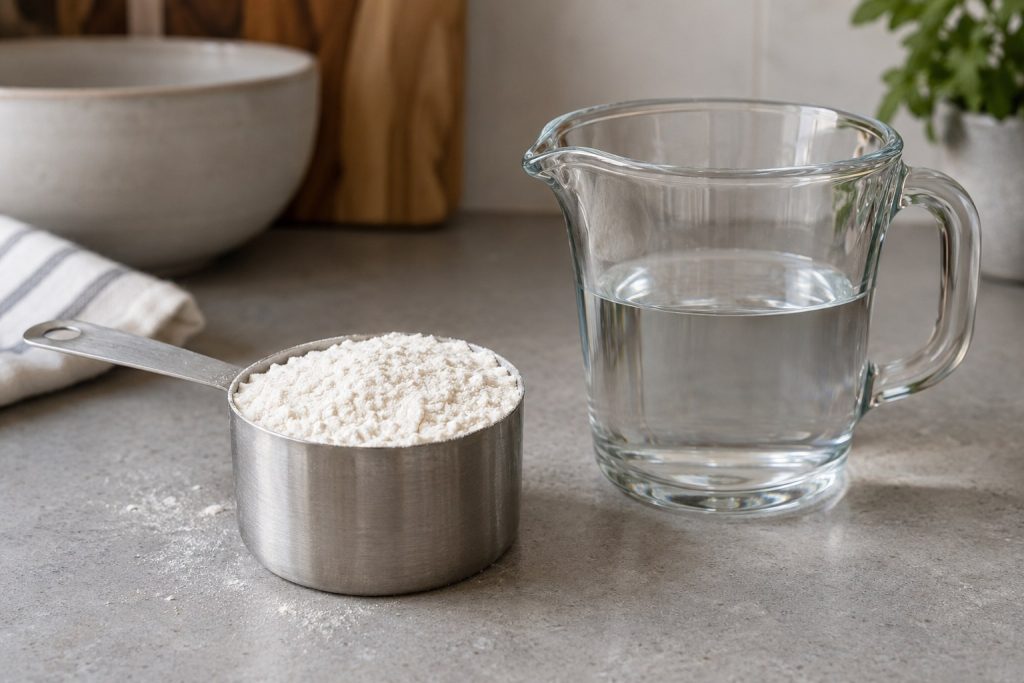
Level dry ingredients as directed
For flour, follow the recipe’s measuring method. Spoon-and-level means adding flour gently, then sweeping off the excess with a straight edge. Scooping and packing can put more flour into the same cup. Do not compress an ingredient unless the recipe asks for it.
Read liquids on a flat surface
Set a transparent measuring jug on a level counter and read the appropriate line at eye level. Holding it in the air or looking down at an angle makes the reading less consistent. Check which units the marks represent before pouring.
Use grams when the recipe supplies them
A kitchen scale can make repeat measurements easier. Place the container on the scale, tare it and add the stated ingredient weight. Grams measure mass, while milliliters and cups measure volume; equal volumes of flour and water do not have equal weights.
Keep the recipe’s measurement system
Cup standards differ between recipe traditions, so use the stated standard or supplied gram weights. Avoid a universal cups-to-grams conversion for all ingredients. If a recipe gives only volume, use an ingredient-specific reference and keep your measuring method consistent between attempts.
Sources
Related reading
How to Use the Tare Button on a Kitchen Scale
Should You Weigh Food Raw or Cooked? Match the Food to the Entry
Related reading
About this article: an introductory editorial draft. Not yet independently reviewed by a fitness professional.