Edamame vs Mature Soybeans: Buying, Cooking, and Portions
Edamame are soybeans harvested while young and green; mature soybeans are a different stage of the same crop. The forms sold for cooking have different moisture and preparation needs. Neither should be treated as interchangeable with the other by dry weight or cooking time.
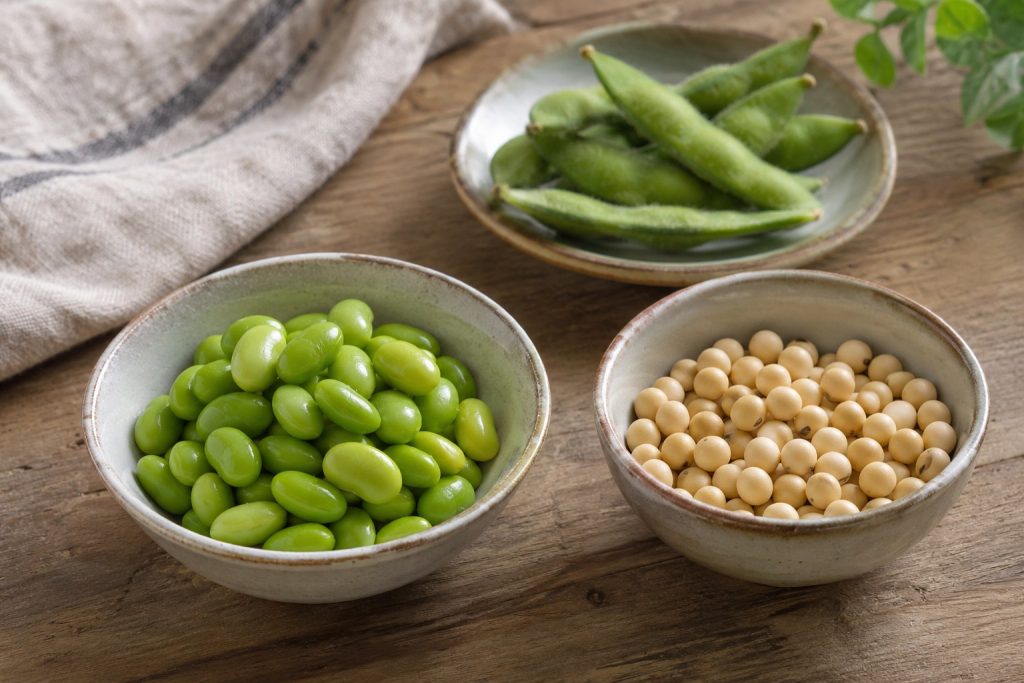
Check what is in the package
Edamame may be sold in pods or already shelled, often frozen. Mature soybeans may be dried or sold as a prepared product. Read the description before choosing a recipe. Green beans are another vegetable and are not simply another name for edamame.
Eat the beans, not the hairy pods
Edamame pods are normally discarded; the beans inside are eaten after suitable cooking. University of Minnesota Extension advises cooking soybeans and not eating them raw. Follow the package’s preparation directions, including frozen products. A green color does not establish that the food is ready to eat.
Compare the edible cooked portion
A bag weighed with pods is not the same edible amount as a bag of shelled beans. Likewise, dry mature soybeans and cooked edamame have different water content. Use matching cooked, edible weights and the correct label when comparing protein or other nutrients.
Plan the dish and preparation time
Shelled edamame can fit a bowl or side dish; dried mature beans require their own preparation and cooking instructions. Do not substitute by guessing a shorter cooking time. Soy allergy applies to both forms. Store unopened, opened, and cooked products according to their respective instructions.
Sources
University of Minnesota Extension; FDA.
Related reading
Tofu vs. Tempeh: A Practical Guide for Everyday Meals
Green Peas vs Green Beans: Different Vegetables, Different Uses
About this article: an introductory editorial draft. Not yet independently reviewed by a fitness professional.