Green Peas vs Green Beans: Different Vegetables, Different Uses
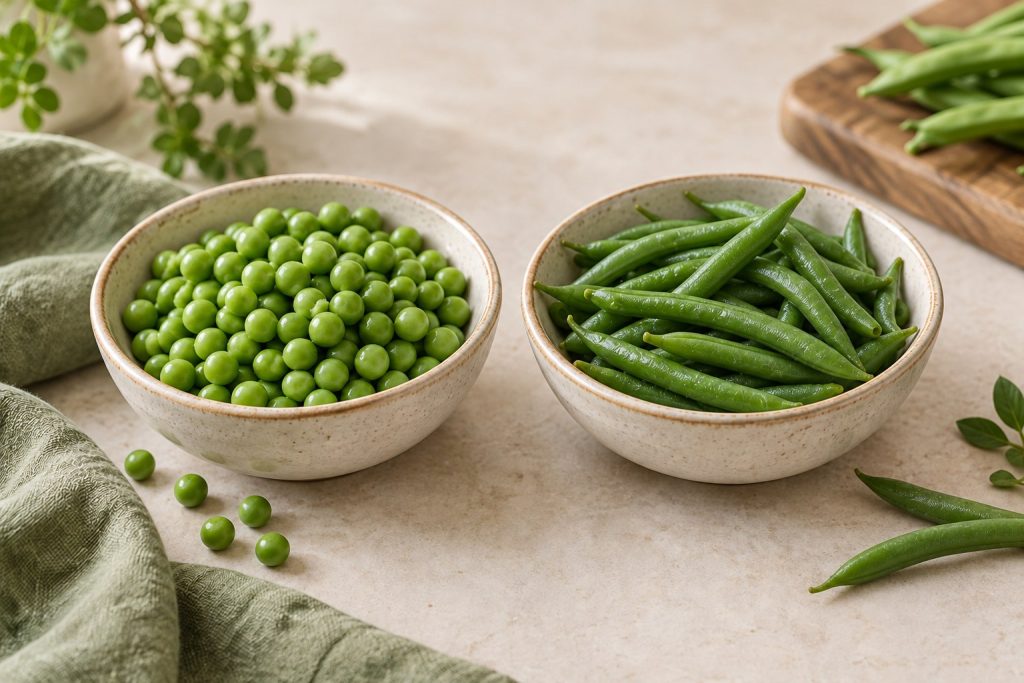
Green peas and green beans are different foods even though both are green and belong to the legume family. Peas are the small seeds; green beans are eaten as young pods. Do not treat either as identical to dried beans or split peas when choosing a recipe or nutrition entry.
Choose the texture for the dish
Green peas are small and mix easily into rice, soups, or pasta. Green beans bring longer pieces and a different bite to a side dish or stir-fry. Either can be useful; choose the texture you want. Swapping them may change the eating experience even when the quantity looks similar.
Compare the actual nutrition entry
Use the same weight and preparation when comparing carbohydrate, fiber, or protein. A plain cooked vegetable is not the same entry as one in sauce. Do not infer identical values from the color or the word bean. For packaged foods, the product label is more specific than a generic comparison.
Check frozen and canned formats
Read whether the package is plain or includes salt, sauce, or other ingredients. Follow cooking directions rather than assuming frozen vegetables are ready to eat without cooking. If a canned label refers to drained contents, compare it with another drained value. The liquid and serving basis can change the comparison.
Make the substitution work
Follow the recipe’s cooking sequence and check the intended texture instead of automatically using the same cooking time. Add other meal components as needed; a vegetable name alone does not describe a complete meal. Choose pack sizes you can use and follow storage instructions for opened packages and prepared leftovers.
Sources
University of Minnesota Extension; FDA.
Related reading
Canned vs. Frozen Vegetables: A Practical Shopping Guide
Lentils vs. Chickpeas: Which Fits Your Meal?
Related reading
About this article: an introductory editorial draft. Not yet independently reviewed by a fitness professional.